Civil Ceremony-Day Flow
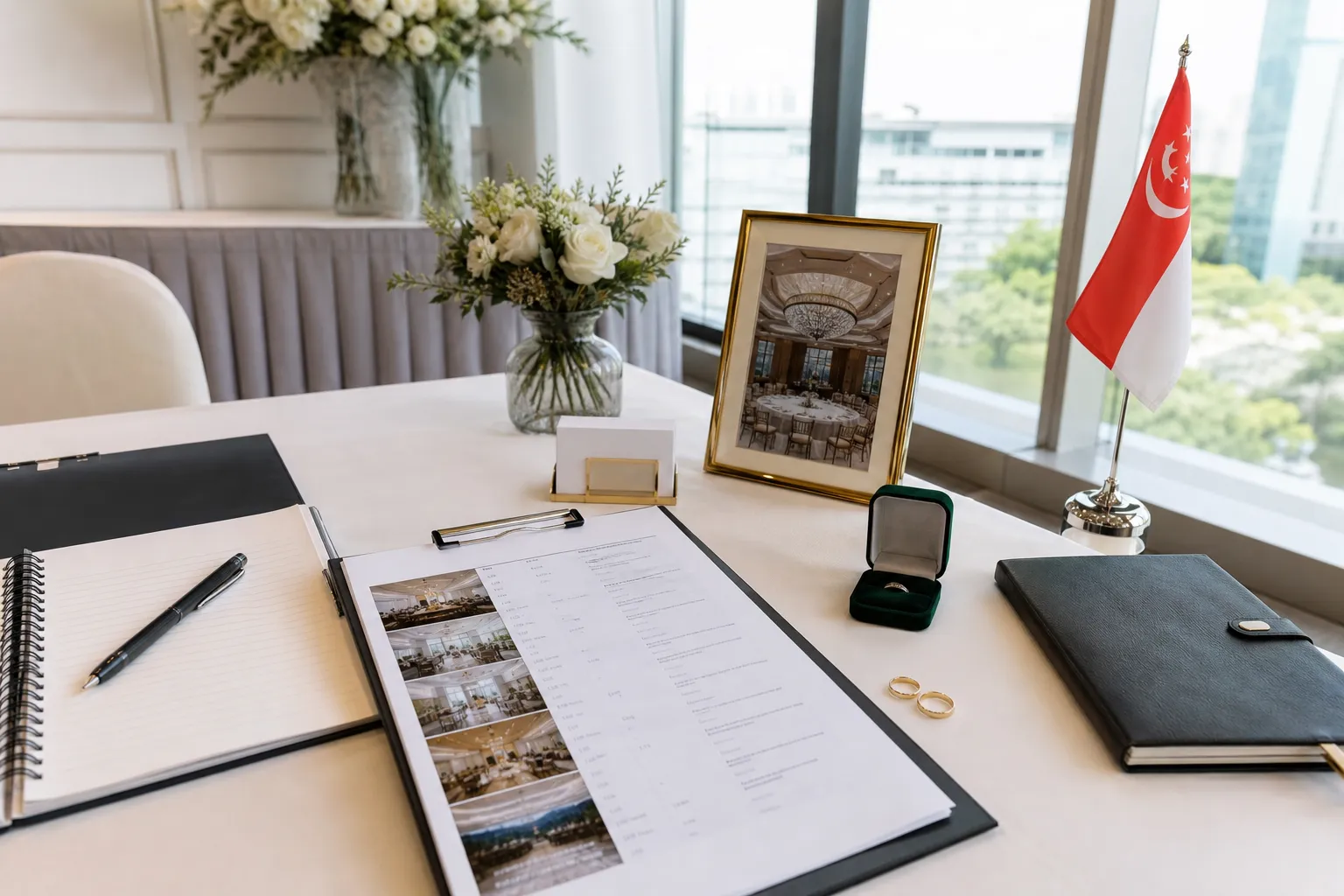
A Singapore civil solemnisation ceremony day is easier to run when it is treated as a chain of confirmed handoffs rather than one start time. The couple, solemniser, witnesses, venue contact, family members, and vendors may each be working from different assumptions. A useful plan shows where each person needs to be, what they own, and who takes over as the day moves from arrival to solemnisation, photographs, and the next event.
What Changes the Ceremony-Day Flow?
There is no single timetable that fits every solemnisation ceremony. The shape of the day usually turns on four connected decisions: where the ceremony happens, what surrounds it, how much travel is involved, and who must be present.
Venue and access
A ceremony at a registry setting, hotel, restaurant, private residence, function room, or another permitted location may involve different operating conditions. Confirm the venue-specific requirements for:
- Access, security, and setup times
- Room location, seating, and furniture
- Lift, loading, parking, and drop-off arrangements
- Power, microphones, and sound equipment
- Photography and recording
- Food and beverage timing
- Wet-weather arrangements, where relevant
- Cleanup and departure deadlines
A condition at one hotel, residence, or function space should not be carried over to another without confirmation. At an HDB home or other residential setting, lift access, corridors, deliveries, household space, parking, and neighbours may affect the plan. These are practical considerations, not a universal set of venue rules.
What surrounds the civil milestone
Some couples keep the solemnisation as a self-contained event. Others place it before a meal, banquet, tea ceremony, family gathering, reception, or separate cultural or religious celebration. Historical scholarship describes civil registration and later customary or religious celebrations as distinct events in some Singapore couples’ lives. That context can explain why families refer to more than one “wedding day”; it does not establish today’s procedure or require one sequence.
Label each block clearly: civil milestone, family custom, religious practice, venue programming, or personal preference. Each block should have its own timing and person in charge.
Movement and attendance
Every move between a home, ceremony venue, photography location, and reception venue adds travel, loading, unloading, parking, access, and item-custody questions. A short ceremony can still produce a long event day.
Separate people whose presence must be confirmed for the civil process from those attending by family or personal choice. Confirm the applicable requirements with the relevant public service and appointed solemniser rather than copying another couple’s schedule. Then assign separate call times for the couple, required participants, venue contact, photographer, transport lead, family representatives, and guests.
Build the Day Around Confirmed Milestones
Start with the fixed or externally controlled points: venue access, the solemniser’s requested arrival time, the solemnisation appointment, and the next booked event. Add photographs, speeches, and customary activities only after those points have room around them.
1. Before Anyone Travels
Use the pre-departure check to prevent essential people and items from becoming separated. Confirm:
- Which current civil-process information applies to the couple’s case
- What the solemniser has asked the couple and other participants to prepare
- Who is carrying each requested item
- Whether any digital access, device, account, or connectivity is expected
- Where and when everyone will meet
- Who should be contacted if someone is delayed
Use the exact names supplied by the relevant provider when listing documents or identification. “Bring all papers” is too vague to expose a missing item. Name one item custodian and one backup checker. Keep rings, phones, gifts, bouquets, spare shoes, touch-up items, and bags on a separate custody list so they are not confused with civil-process requirements.
2. Venue Access and Setup
Venue access is not the same as guest arrival. Someone may need to enter early to meet the venue contact, locate the ceremony area, receive vendors, check seating, and confirm the room.
Assign one venue liaison to handle access, providers, setup questions, and the readiness report. The couple should not be the default contact for routine logistics while dressing, travelling, or preparing to meet the solemniser.
3. Arrival and Readiness
Give the operational group and guests different arrival targets. The operational group may need time to locate the room, settle belongings, use the restroom, adjust attire, and complete any requested checks. Guests need instructions based on actual venue access; arriving too early can leave them waiting without direction, while arriving at the ceremony start may interrupt a brief event.
Before proceedings begin, the coordinator should be able to answer four questions:
- Are all required people present?
- Are all requested items available?
- Is the ceremony area ready?
- Is the solemniser ready to proceed?
The run sheet should show names and contact details, not only labels such as “venue” or “witness.”
4. The Solemnisation Window
Follow the current instructions given for the couple’s case. Do not build the schedule from an online anecdote, an old description of registry procedure, or another wedding’s ceremony order.
Reserve a protected window for final positioning, instructions from the solemniser, the solemnisation, any required completion steps, and a short transition before photographs or guest movement. Vendors should know when to stop moving equipment, family members should know where to stand, and guests should receive directions before proceedings begin.
Photography needs its own boundary. Ask the couple, solemniser, and venue in advance about positioning, movement, and restrictions. Do not assume that every angle or interruption will be acceptable.
5. The Immediate Post-Ceremony Handoff
The first few minutes after the ceremony can become crowded with greetings, family photographs, belongings, and onward travel. Decide in advance:
- Who retains important items
- Who returns phones and personal belongings
- Who gathers immediate-family photographs
- Who tells guests what happens next
- Who confirms transport readiness
- Who checks the ceremony room before departure
- Who handles the venue or provider close-out, where applicable
A family representative or coordinator can manage the transition while the couple handles only actions that require their consent or participation. For group photographs, name one caller and prepare a short priority list.
6. Moving to the Next Event
A banquet, tea ceremony, family meal, reception, or religious event is a new operating block with its own owner and readiness check. Cover departure order, vehicle assignments, item custody, travel and unloading, attire changes, food and rest, guest directions, the arrival contact, and the latest practical start time.
Ask participating family members how they want cultural activities to run. Some families may use a familiar sequence or assign roles to particular relatives; others may simplify, combine, or omit parts. Treat these as variable arrangements unless a relevant religious institution or provider has given case-specific instructions.
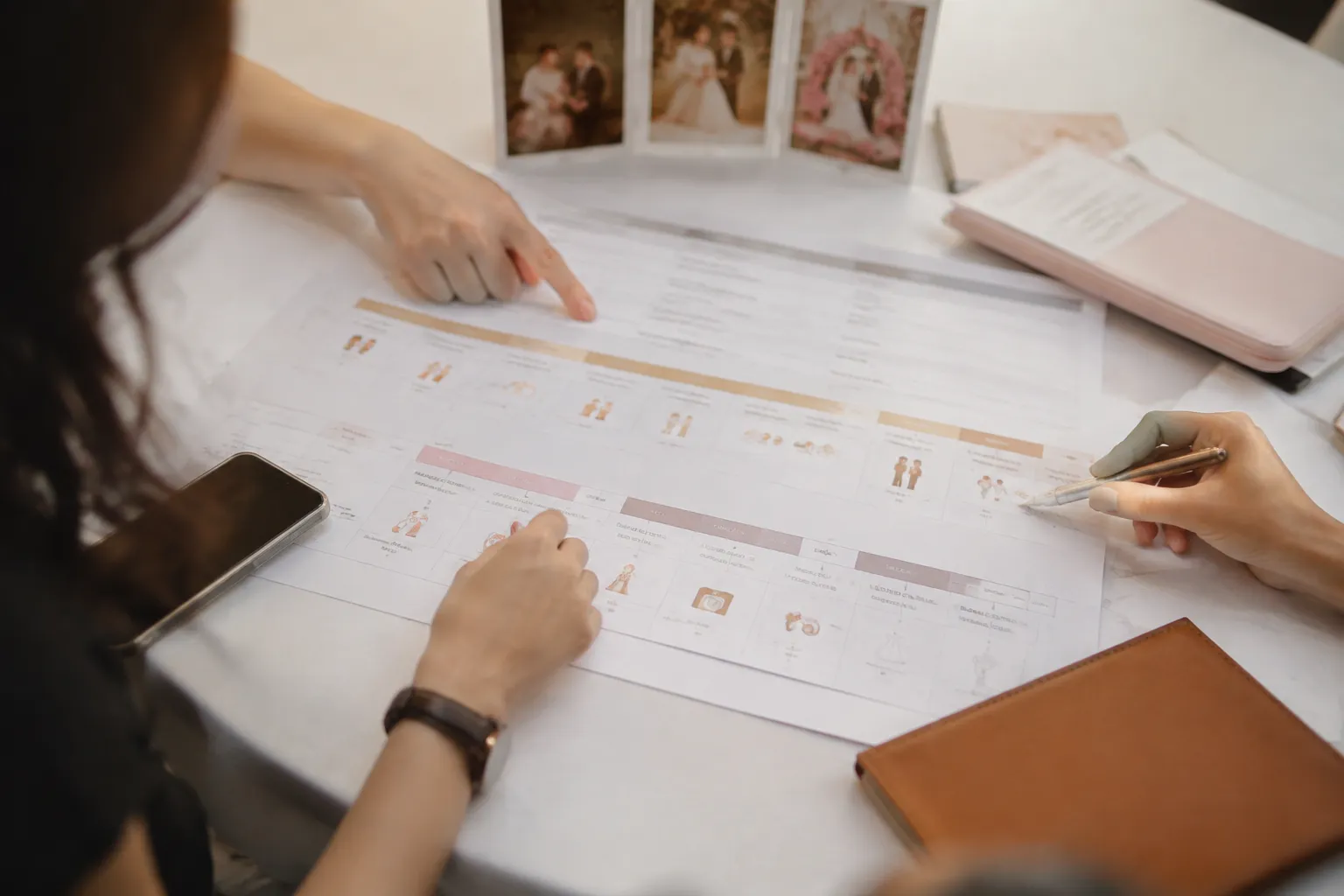
A Working Ceremony-Day Run Sheet
Each line should identify the time, place, action, owner, and dependency. Add exact times after the externally controlled milestones have been confirmed.
| Time block | Place | Action | Owner | Already confirmed |
|---|---|---|---|---|
| Before departure | Home or preparation venue | Check requested items and attendance | Named checker | Current instructions and item list |
| Travel window | Pickup point | Move the required group to the venue | Transport lead | Vehicles, route, and passenger list |
| Setup window | Ceremony venue | Access the room and receive providers | Venue liaison | Entry time and venue contact |
| Readiness window | Ceremony area | Confirm people, items, and space | Ceremony coordinator | Solemniser and venue instructions |
| Solemnisation window | Ceremony area | Follow the confirmed ceremony process | Couple and solemniser | Required participants present |
| Post-ceremony window | Ceremony area | Complete handoffs and priority photographs | Coordinator and photo caller | Item custody and group list |
| Departure window | Exit or pickup point | Move the couple and guests onward | Transport lead | Vehicle order and destination contact |
| Next-event arrival | Reception or family venue | Transfer control to the next event owner | Next-event lead | Access, setup, and start conditions |
The table is a coordination model, not a statement about ceremony duration or procedure.
Assign Owners, Not Just Tasks
A task without an owner usually returns to the couple. Give every operational responsibility one named person and, for critical items, a backup.
- Couple
- Retain decisions requiring their consent, personal information, or direct participation, and approve the final run sheet. They do not need to manage every guest message or delivery on the day.
- Ceremony coordinator
- Hold the complete schedule, contact list, venue instructions, and authority to make limited logistical decisions.
- Item custodian
- Control assigned items and record when custody begins and ends. Any list of civil ceremony documents or identification should come from current instructions.
- Venue liaison
- Handle access, room location, furniture, sound, deliveries, and communication with the venue representative.
- Guest contact
- Answer questions about entrances, rooms, parking, delays, and movement to the next event.
- Photography caller
- Gather relatives in priority order while the photographer focuses on framing and capture.
- Transport lead
- Track passengers, vehicles, waiting points, essential items, and arrival at the next location.
Keep Different Requirements Separate
Many ceremony-day disagreements begin when every request is treated as part of one binding procedure. Sort each instruction by its source.
- Public-process information: current civil-process information applicable to the couple’s case, checked with the relevant Singapore public service.
- Solemniser instructions: preparation, participants, timing, or arrangements requested by the appointed solemniser.
- Venue policy: access, furniture, sound, photography, catering, security, parking, and departure conditions set by the venue.
- Religious or cultural practice: pathway-specific elements confirmed with the relevant religious contact or institution where needed.
- Personal preference: music, entrances, readings, décor, guest seating, photographs, and celebration order chosen by the couple or family within the other constraints.
A solemniser’s availability does not establish venue access, and a venue booking does not settle the civil process. When instructions appear inconsistent, identify their source first. The solution may be a timing or venue adjustment rather than a disagreement about the solemnisation itself.
Common Ceremony-Day Shapes
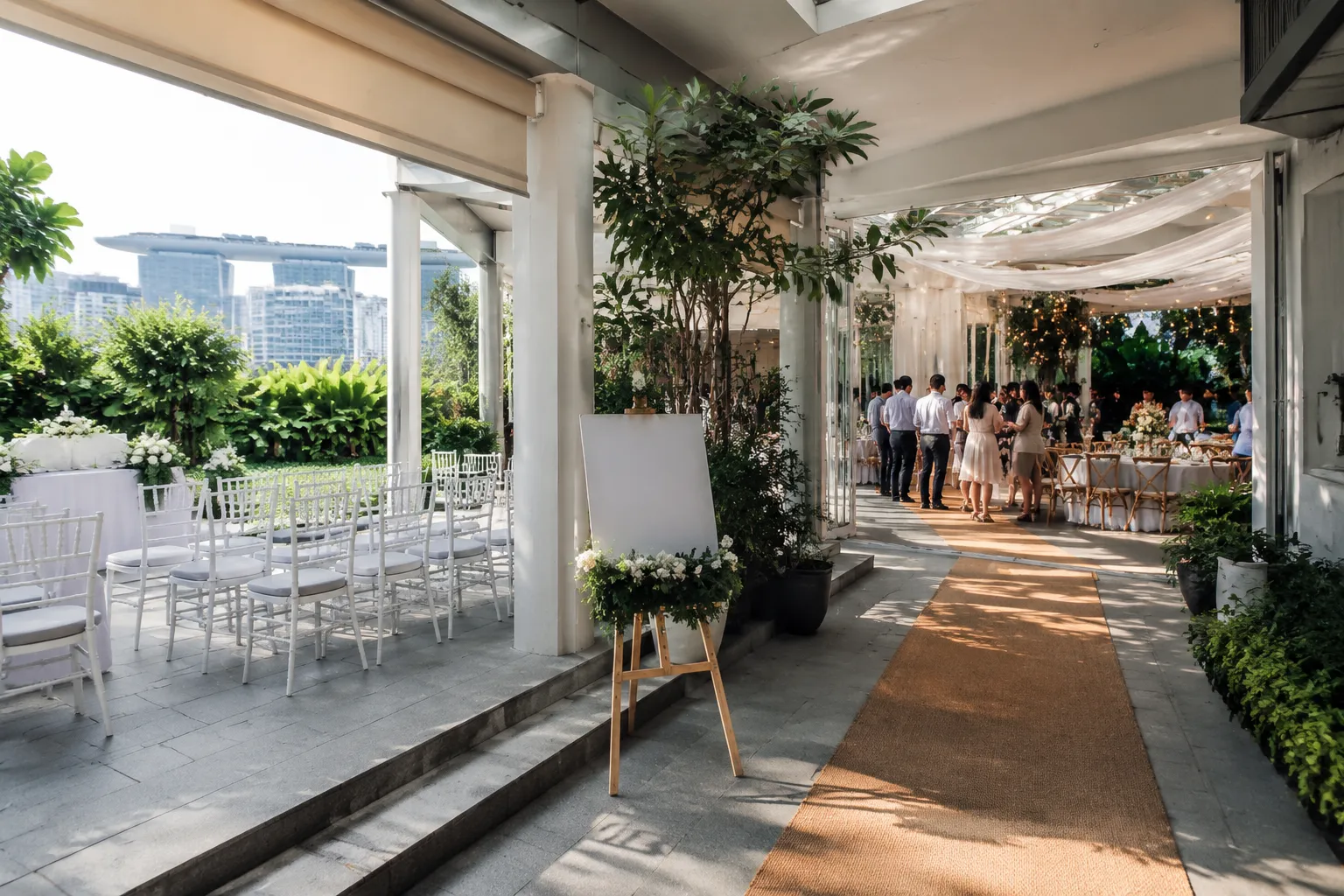
Solemnisation followed by a meal at the same venue
Travel is simpler, but the room transition needs an owner. Confirm whether guests remain seated, move elsewhere, or wait while the venue changes the setup. Protect the couple’s photograph window.
Solemnisation at home followed by a hotel event
The residence needs an access lead and the hotel needs a separate arrival contact. Plan the transfer of belongings, loading, travel, unloading, and entry into the next room.
Solemnisation and banquet separated by several hours
The open period is not automatically spare time. Allow for food, rest, travel, attire changes, and photographs. Tell guests whether the events are continuous or require a separate arrival.
Civil solemnisation on a different day from the larger celebration
Keep separate plans. A smaller civil day still needs confirmed people, items, access, and handoffs. Do not write the later celebration as though it contains the civil milestone when it does not.
Civil and cultural activities on one day
Identify which parts are fixed by providers and which can move. If a tea ceremony, family welcome, reception, or other customary activity runs late, the coordinator should know which block can be shortened and which appointment must remain protected.
Use Buffers for Named Uncertainties
A large unlabelled gap does not automatically make a schedule resilient. Attach each buffer to the uncertainty it is meant to absorb:
- Arrival: parking, security, locating the room, and assembling the required group
- Setup: furniture, sound, deliveries, and provider access
- Readiness: attire, personal needs, and final requested checks
- Photographs: gathering family members and moving between groups
- Transfer: loading, travel, unloading, and entering the next venue
- Recovery: food, rest, or changing attire before the next event
Do not hide planned activities inside a buffer. Greeting relatives, changing clothes, and taking portraits need their own lines and owners.
Confirm Before the Day
Bring together the current instructions from each relevant source without blending them into one list.
With the relevant public service
Check the current information applicable to the couple’s civil solemnisation. This page does not provide a basis for stating present requirements about eligibility, documents, witnesses, appointment timing, digital procedures, or case-specific conditions.
With the solemniser
Confirm what the couple and other participants need to prepare, when they should arrive, how the solemniser wishes to be contacted, and whether the venue arrangement needs attention.
With the venue
Verify access, room, layout, sound, photography, deliveries, parking, food timing, and departure conditions. Record the person handling the event.
With vendors, family, and guests
Give vendors the address, correct entrance, access time, working window, named contact, and provider-attributed restrictions. Send guests the meeting point, arrival time, transport information, and next step. People with responsibilities should receive a separate message naming their task and handoff.
When the Plan Is Tested
Protect the solemnisation milestone first, then manage the surrounding celebration. Decide who responds if a required person is delayed, a vehicle cannot reach the pickup point, the room is not ready, a vendor is late, outdoor plans change, sound equipment is unavailable, guests use the wrong entrance, photographs overrun, or the next venue is not ready.
The response depends on current instructions and provider conditions, so keep escalation contacts in the run sheet: the solemniser, venue representative, transport lead, next-event contact, and item custodian. The coordinator can resolve guest directions, vendor access, and vehicle placement. Questions affecting the civil process, consent, or a provider’s requirements should go to the appropriate party.
Common Planning Mix-Ups
- Treating the invitation time as the operational start. Setup and procedural responsibilities usually need separate arrival instructions from guests.
- Assuming the solemniser manages the whole event. Venue management, guest direction, photography, and transport still need owners unless a provider has agreed to handle them.
- Copying another couple’s document list or ceremony order. Their circumstances and instructions may differ, or the process may have changed.
- Calling every family activity part of the civil procedure. A tea ceremony, reception, banquet, religious observance, or family welcome may sit beside the solemnisation without becoming part of it.
- Leaving important items with “the family.” Name one custodian, specify the bag or container, and record each handoff.
- Making the couple the contact for everyone. Give venues, vendors, drivers, and guests the person suited to their question.
- Planning only to the ceremony start. Arrival, readiness, photographs, belongings, guest movement, and departure are part of the flow too.
Final Readiness Test
The plan is ready when every externally controlled point has a source, every task has an owner, and every essential item has a custodian. Before the day, the couple should be able to answer:
- Which current public-service information applies to our case?
- What has the solemniser asked us to confirm?
- What does the venue permit, provide, and require?
- Who must be present, and what arrival time has each person received?
- Who carries each requested item?
- Who meets the venue and vendors?
- Who directs guests and controls photographs?
- Who manages transport and personal belongings?
- Who takes over after the solemnisation?
- Which cultural, religious, or family activities are included by choice or pathway?
- What happens if a person, vehicle, room, or provider is delayed?
A workable Singapore civil solemnisation ceremony day has visible milestones: preparation, access, readiness, solemnisation, immediate handoffs, and onward movement. Civil-process information stays with the relevant public service; ceremony instructions stay with the appointed solemniser; venue conditions stay with the venue; and family or religious elements stay with the people responsible for them. That separation gives the day a clearer flow without turning one couple’s arrangements into a universal rule.
Sources
- “We are registered”: actual processes and the law of marriage in Singapore for historical and legal-context boundaries around civil registration and marriage practice.
- Religious Legal Pluralism Revisited – The Status of the Roman Catholic Church and Her Canon Law in Singapore for context on the distinction between civil arrangements and religious institutional practice.
Changing civil-process details, solemniser instructions, and venue conditions should be checked with the relevant provider before publication or use.