Guo Da Li and Hui Li Gift Handoff Plan
A workable Guo Da Li Hui Li handoff starts with one family-confirmed item list and one named coordinator. Record who prepares, transports, receives, checks, returns, stores, and distributes each item.
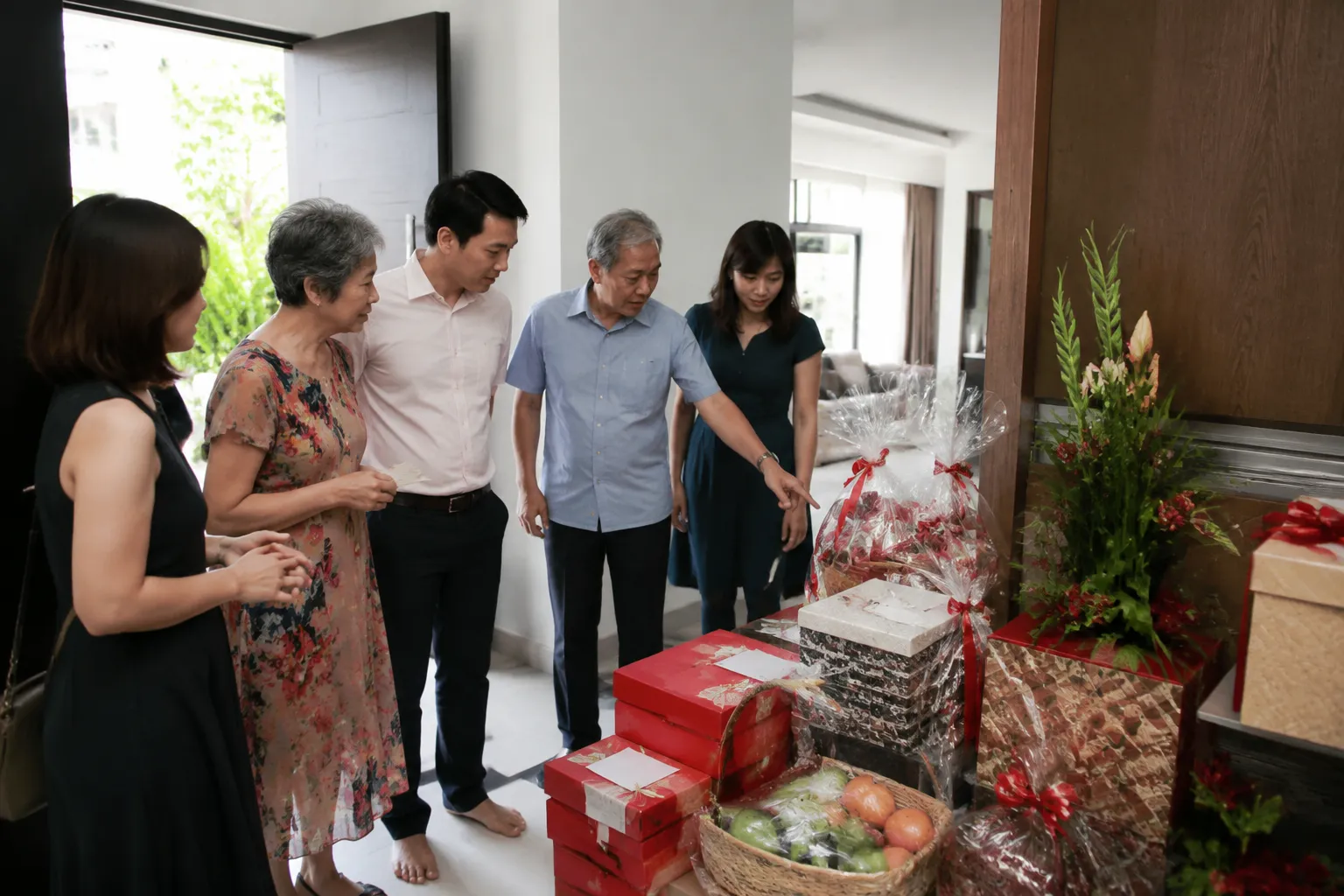
Begin with both families, not a vendor package or generic checklist. Ask what each family means by Guo Da Li and Hui Li, which items they expect, and what should happen after the exchange. Terminology, quantities, meanings, and return arrangements may differ between families.
Confirm the arrangement before preparing gifts
Arrange one conversation involving the couple and the relevant decision-maker from each family. A planner or relative may coordinate it, but should not decide cultural questions for them.
- The terms each family uses for the two parts of the exchange
- The item list, quantity, and acceptable substitutions
- Which items will be returned, retained, opened, displayed, or redistributed
- Who will present, receive, check, and carry the gifts
- The date, location, and arrival window
- Whether photography is wanted
- Any handling, storage, or prompt-distribution needs
- Questions that still require a family decision
Record disagreements as open decisions. Do not settle them by relying on a standard bundle, a dialect label, or a seller's claim that one arrangement is complete.
Both families have reviewed the item list, return arrangement, participants, timing, location, and post-handoff ownership.
This statement is a useful planning checkpoint, not part of the custom itself.
Build one register for the full handoff
Keep arriving gifts and agreed Hui Li return items in the same register. The coordinator should be able to trace each item from preparation through its final destination.
| Family's item label | Quantity | Preparation owner | Transport owner | Receiving contact | Return action | Final destination | Status |
|---|---|---|---|---|---|---|---|
| Family-confirmed item | Agreed quantity | Named person | Named person | Named person | Return, retain, or pending | Named person or location | Ready |
| Family-confirmed item | Agreed quantity | Named person | Named person | Named person | Agreed quantity to return | Named person or location | Pending |
Use the names supplied by the families. Add Chinese characters, symbolic meanings, or dialect classifications only when the families have confirmed them through a source they trust.
Keep receipt, return, and ownership as separate fields. Receiving the expected item does not decide how much returns or who keeps what remains.
Assign one owner to each responsibility
One person may cover several roles during a small home exchange, but every responsibility should still have a name.
- Family decision-makers: settle terminology, quantities, substitutions, and return arrangements.
- Couple: reconcile preferences and decide how much coordination they will handle.
- Handoff coordinator: maintains the register, briefs participants, and follows up on open decisions.
- Preparation owner: checks that items are ready, grouped, and labelled where needed.
- Transport owner: manages vehicle capacity, loading order, access, and the travel buffer.
- Receiving contact: directs unloading and identifies the receiving area.
- Receipt checker: compares delivered groups with the agreed register without interrupting the family interaction.
- Hui Li staging owner: separates agreed return items from gifts that will remain.
- Distribution owner: handles retained items after the exchange.
Assign a backup transport or receiving contact. Parking delays, repeated lift trips, or a missed call should not leave the handoff without an owner.
Test the timing and location
There is no single schedule that fits every Guo Da Li and Hui Li arrangement. Once both families choose the date and place, check whether the route works in practice.
For an HDB home, review lift access, vehicle drop-off, the walking route, indoor sorting space, and a separate return-item area. Keep shared corridors clear and allow for rain during unloading.
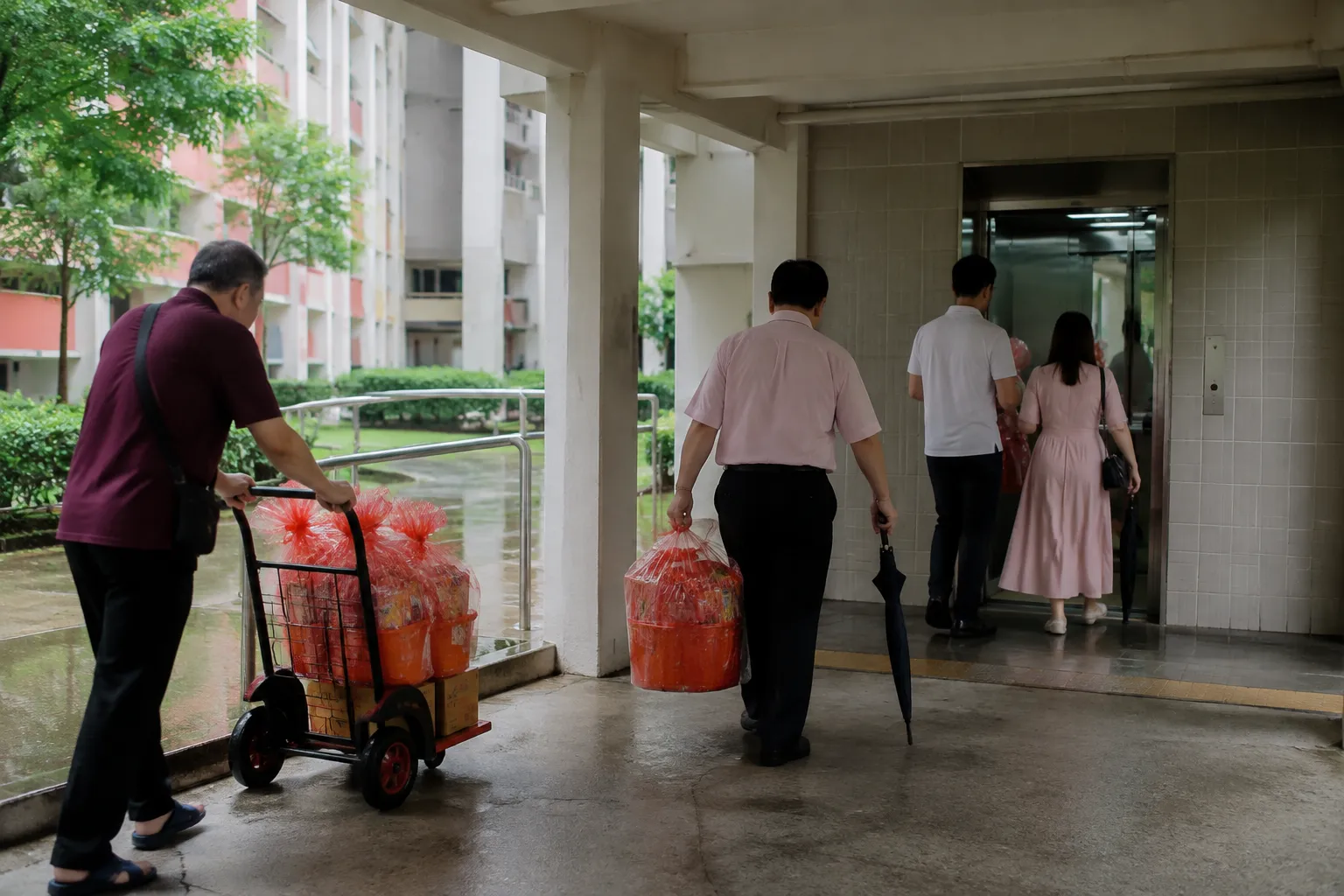
For a condominium, hotel, hall, or other managed venue, obtain that provider's current instructions. Security registration, loading access, parking, trolley use, room availability, and storage conditions vary by property.
Use an arrival window rather than one exact minute. Include travel, unloading, limited parking, and multiple lift journeys. Protect any meal, attire change, tea ceremony, or later appointment scheduled for the same day.
Pack and transport by next action
The preparation owner should check the register before loading. Photographs of a package display are not a substitute for the families' agreed list.
- Item label and quantity
- Packaging and requested presentation
- Handling or storage note
- Destination and carrying person
- Return, retain, or pending status
Group items according to what happens next. Gifts that will remain should be separate from agreed returns, while unresolved items need a clearly marked holding area.
If several vehicles are involved, record what each vehicle carries. Share the arrival window, destination instructions, and receiving contact with every driver. Where practical, load in reverse unloading order.
At the destination, place gifts in a prepared indoor zone instead of mixing them with household belongings or other wedding supplies. Follow packaging or provider instructions for items with specific handling needs.
Check receipt and stage Hui Li items
The receipt check records the physical handoff without turning it into an invented ritual. The checker can mark each entry as received, substituted by agreement, incomplete, pending, or not received.
Raise sensitive differences privately with the coordinator or relevant family decision-maker. A missing or substituted item may matter to that family, but its meaning should not be generalised.
Where both families use Hui Li for an agreed return part of the exchange, prepare a separate staging area before the arriving gifts are unpacked or redistributed. For each return item, record the quantity, packing owner, carrier, destination, and receiving person.
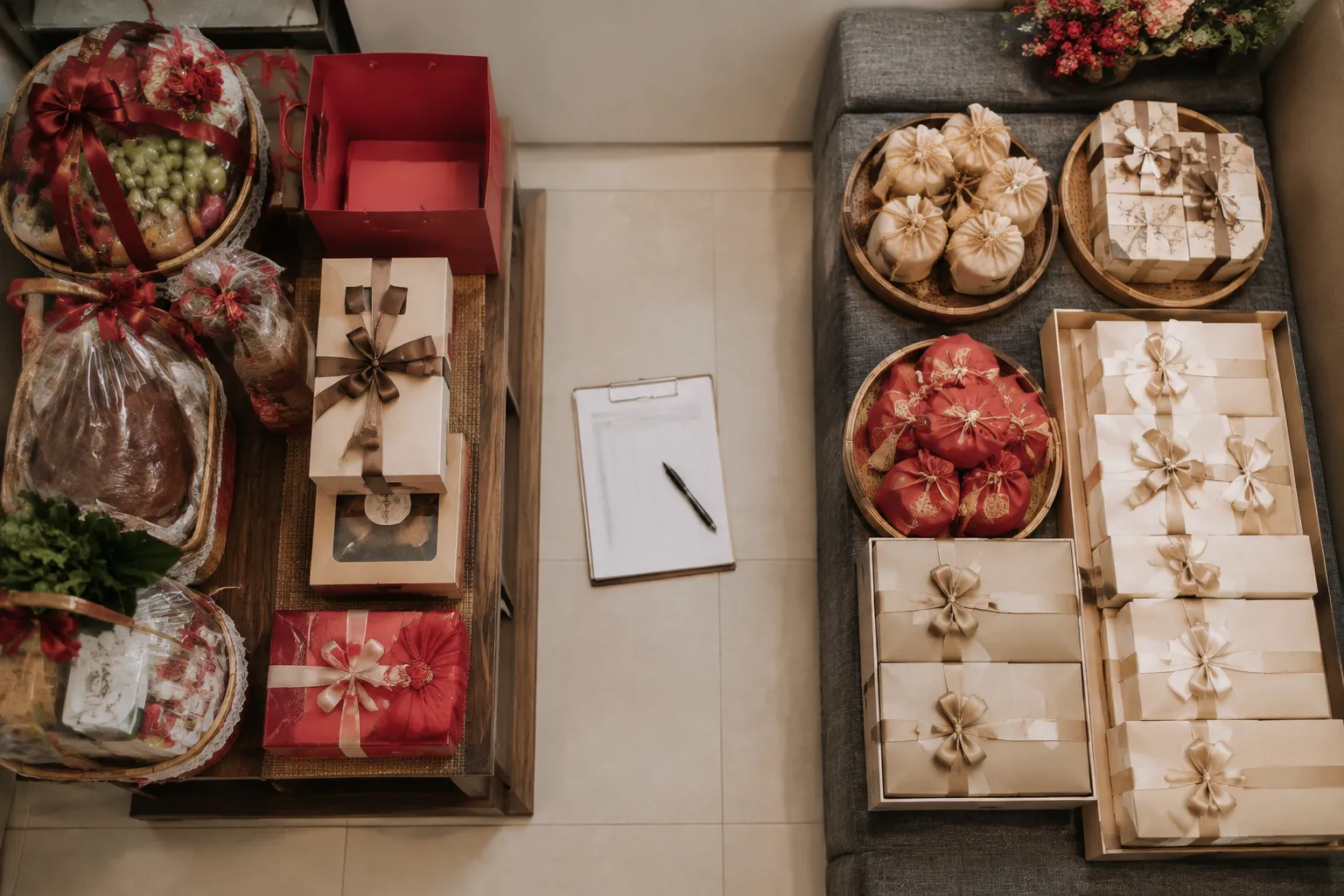
Do not infer a return ratio from a vendor package or another family's example. The available sources do not establish one standard item-by-item formula for contemporary Singapore practice.
If a decision remains open, place the affected item in the pending area. Do not divide, open, or redistribute it until the relevant family members agree on the next action.
Record ownership and follow-up
The handoff continues after the photographs or departure. Every retained item needs a named owner and a next destination.
- Kept by a named family member
- Stored at the receiving home
- Moved to the couple's home
- Distributed among relatives
- Served or consumed at an agreed time
- Collected later
- Held until another decision is made
Name both the storage location and responsible person. “Leave at the family home” is too vague when several people could assume someone else will handle it.
After the exchange, send the couple and relevant family contacts a short factual update. List exceptions, completed returns, retained-item owners, collection tasks, and the person responsible for each outstanding action.
Example: an HDB home handoff
Several days before the exchange, the couple agrees the gift and return lists with both families. The coordinator assigns a preparation owner, driver, receiving contact, receipt checker, and Hui Li staging owner.
On the day, the receiving contact clears an indoor area near the entrance. Gifts arrive in labelled groups and move to the receiving zone. The checker compares them with the register while the families conduct the exchange in their preferred manner.
Agreed return items then move to the separate staging area before loading into the returning vehicle. Retained items receive storage or distribution owners before everyone leaves for the next appointment.
This is one possible logistical sequence. It does not establish the customary participants, timing, order, or meaning for another family.
Common misunderstandings and evidence limits
A complete-looking vendor bundle does not establish a universal gift list. Likewise, receiving an item does not automatically determine its return quantity or final owner.
The available research supports only a cautious cultural boundary. Historical scholarship shows that Chinese wedding rites changed across periods, so ancient stages and ceremonial objects should not be mapped directly onto a present-day Singapore exchange.
A Singapore university case study examines how one wedding-service company simplifies and standardises practices for contemporary customers. Because it concerns one commercial intermediary, it cannot settle Guo Da Li and Hui Li terminology or procedures across families.
Research on wedding foods across East Asia also shows that symbolism depends on community and context. It cannot assign one fixed meaning to an item used by different Singapore families.
The supplied material does not settle local terminology, Chinese characters, timing, participants, quantities, return ratios, ownership rules, or dialect-group differences. Agree those cultural decisions first. The coordinator can then manage the people, transport, receipt, return, storage, and final follow-up without presenting the register as custom.