Planning a Chinese Wedding Gatecrash at an HDB Home
Start an HDB wedding gatecrash plan with four decisions: who participates, where activities happen, when the group leaves, and who restores the home. Keep the main programme inside the flat unless the responsible property contact confirms that a shared area may be used as intended.
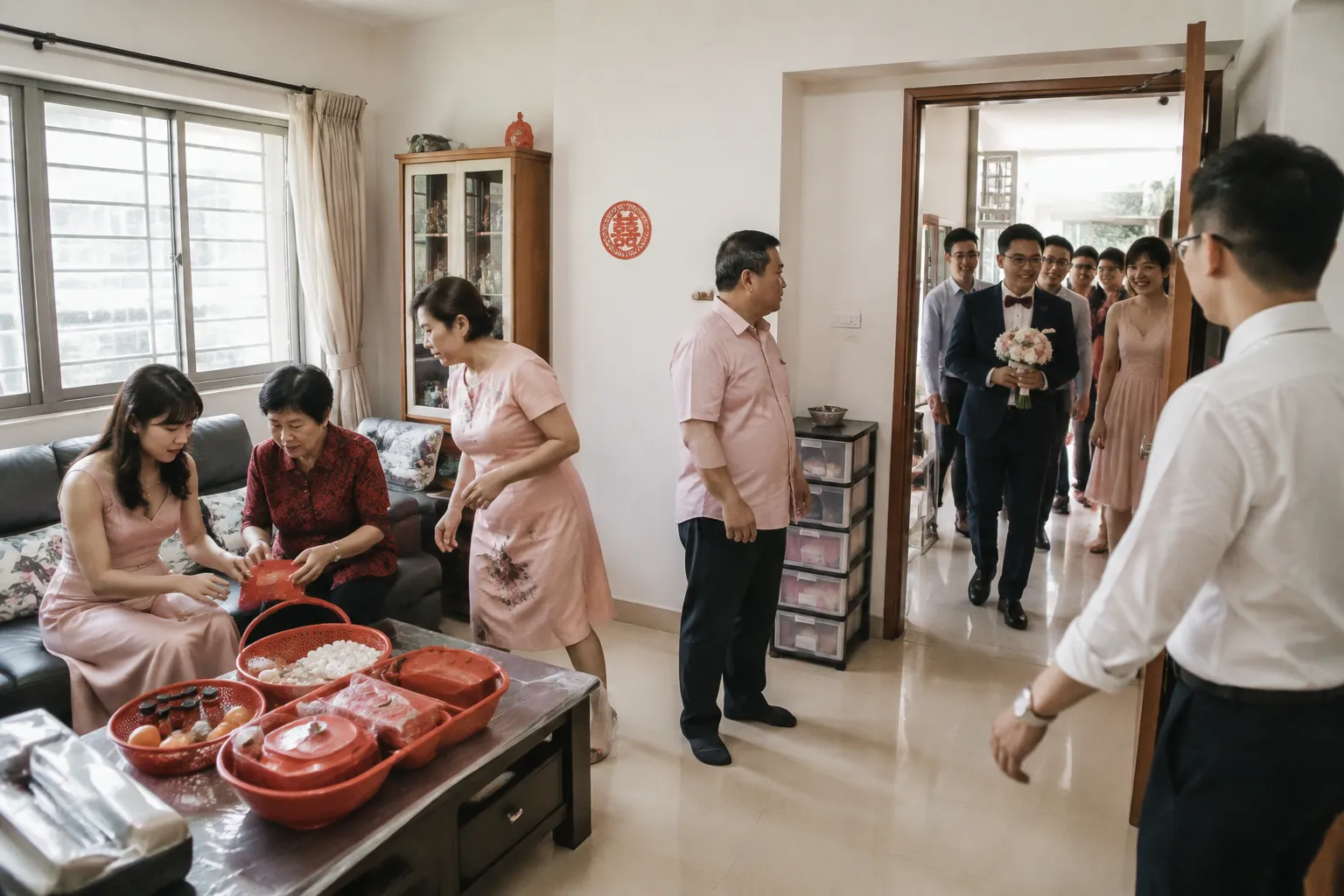
Work backward from the next fixed commitment, such as a tea ceremony, civil solemnisation, religious programme, or hotel arrival window. Assign a sequence lead with authority to shorten activities, plus a transport lead responsible for vehicles, essential bags, and the next-location handoff.
Agree on the Family Format First
Some families treat the gatecrash as a playful welcome before the groom enters. Others connect it to the bride’s departure, a tea ceremony, or another family exchange. A couple may shorten or omit it.
Before choosing games, agree on:
- Whether the gatecrash will take place.
- Which family customs the couple wants to retain.
- Whether games or door-opening negotiations are included.
- Who represents each side during the exchange.
- Whether parents or elders want to witness a particular moment.
- What any auspicious time refers to: arrival, door opening, departure, or another milestone.
- Which actions, language, food items, or filming angles are excluded.
Chinese wedding practices in Singapore may vary with family background, dialect-group context, religion, generation, and personal preference. Research on commercial wedding services also shows how providers may package or simplify customs. A provider’s programme is therefore an option, not a rule for every family.
Record the chosen format in one short sequence. For example: “The groom’s party arrives, the bridesmaids lead two games inside the flat, one representative handles the negotiation, and the door opens after the family cue.” This gives relatives and providers a shared boundary before the wedding morning.
Map the Home and Arrival Route
Separate the household’s private interior from corridors, lift lobbies, stair landings, void decks, and sheltered access points. Space outside the front door should not be treated automatically as part of the flat.
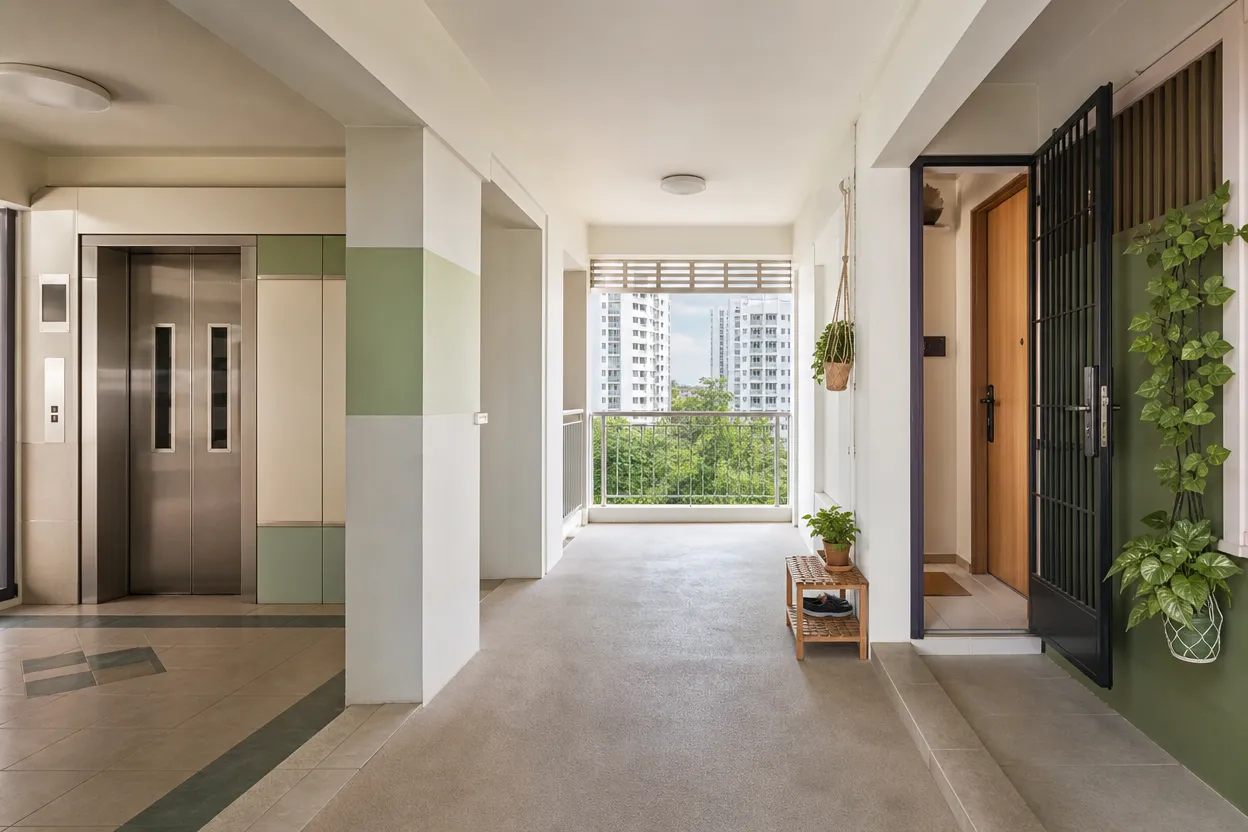
- Trace the route from the meeting point to the correct block and lift.
- Choose where the groom’s party assembles before approaching the unit.
- Set the doorway position for the opening exchange.
- Decide where everyone moves after the door opens.
- Mark indoor positions for family members and photographers.
- Trace the departure route back to the vehicles.
At each point, consider residents, deliveries, prams, mobility devices, and cleaning activity. Ask the responsible property contact about any current conditions affecting the route or intended use of shared space.
| Zone | Suggested use | Decision to make |
|---|---|---|
| Living room | Main activity area | How many people fit without repeated furniture movement? |
| Preparation room | Bride and immediate helpers | Who may enter, and at what cue? |
| Entrance | Door-opening handoff | Can the exchange remain controlled without a crowd outside? |
| Kitchen or service area | Supplies and cleanup | Who manages food, packaging, spills, and rubbish? |
| Corridor and lift route | Movement unless another use is confirmed | What building conditions affect waiting, filming, or equipment? |
| Pickup point | Vehicle handoff | Where do passengers and essential bags meet? |
This is a planning model, not a statement of property policy. Conditions may depend on the block, property manager, intended activity, and provider equipment.
Limit Numbers and Assign Decision Owners
Build the participant list from roles rather than inviting everyone connected to the wedding party. The workable number depends on the flat layout, furniture, household needs, and provider equipment.
- Household host: decides which rooms may be used and protects normal household access.
- Sequence lead: gives cues, removes activities when time runs short, and ends the gatecrash.
- Family liaison: ensures parents and elders are ready for each handoff.
- Bride-side representative: coordinates the bridesmaids and door-opening stage.
- Groom-side representative: keeps the arriving party together and handles agreed responses.
- Provider contact: meets photographers, videographers, makeup personnel, or drivers.
- Transport lead: tracks vehicles, passengers, pickup positions, and essential bags.
- Cleanup lead: restores the rooms and checks the entrance before departure.
One person may hold several roles in a small group. What matters is authority: the timekeeper can announce a deadline, but someone must be able to end a game without reopening the discussion.
Build the Timing Plan Backward
Do not start with an assumed game duration. Begin with the first commitment that cannot move easily, then work backward through travel, loading, family photographs, the tea ceremony if included, the door opening, provider preparation, and the groom’s arrival.
| Sequence point | Owner | Dependency |
|---|---|---|
| Arrival at the next location | Couple and relevant contact | Current arrival instructions |
| Departure from the block | Transport lead | Passengers, bags, lift journey, and pickup position |
| Final family handoff | Family liaison | Couple, family members, and photographer ready |
| Door opens | Sequence lead | Agreed games or negotiation concluded |
| Gatecrash begins | Sequence lead | Both parties and providers in position |
| Household setup finishes | Household host | Rooms cleared and essential items placed |
Put confirmed times beside these milestones. Add a separate travel allowance based on the route, lift journey, vehicle arrangement, loading needs, and instructions from the next venue or provider.
The available material does not support a standard duration for an HDB gatecrash. If the backward calculation produces an impractical start time, shorten the programme, reduce the group, move another activity, or reconsider the format.
Control the Door-Opening Handoff
The doorway can become congested when participants, relatives, and cameras move toward it together. Decide who speaks, who responds, who holds agreed items, and what action signals that the door should open.
Keep game supplies in one container and prepare a place for used items. Before accepting an activity from a vendor package or social-media example, check it against the available space, clothing, participant comfort, household boundaries, and remaining time.
Games and negotiations are optional parts of the couple’s chosen format. They should not be treated as public requirements, religious duties, or customs followed by every Chinese family.
Brief Providers and the Next Location
A photographer, makeup provider, and driver each see a different part of the morning. The couple or sequence lead must connect their separate instructions.
Prepare a contact sheet with the provider arrival window, meeting point, household contact, indoor work areas, equipment handoffs, departure milestone, and next-location instructions. Share block and unit details only with people who need them.
Ask photography and video providers where they intend to place people, lights, stands, cables, and bags. If their proposal involves corridors or lift lobbies, verify the current building conditions rather than assuming that the space is available.
Family readiness needs a separate cue. A provider may be prepared while a parent, elder, or essential bag is still missing.
Reduce Neighbour Impact
Research on neighbourliness in Singapore public-housing estates supports paying attention to how residents share and experience common surroundings. It does not establish a notice requirement, noise limit, corridor condition, or event approval process.
- Give participants clear arrival details so they do not call out along the corridor.
- Bring small groups inside promptly instead of using shared areas as waiting rooms.
- Keep voices, music, and repeated cheering under active control.
- Do not leave footwear, props, food, packaging, or bags outside the home.
- Avoid assuming that a particular parking or loading position will be available.
- Decide whether a factual advance note to immediate neighbours suits the circumstances.
If the household chooses to give a neighbour note, state the date, expected activity window, and a contact person. Treat it as a courtesy, not as permission or proof that property conditions have been met.
Prepare the Departure and Cleanup
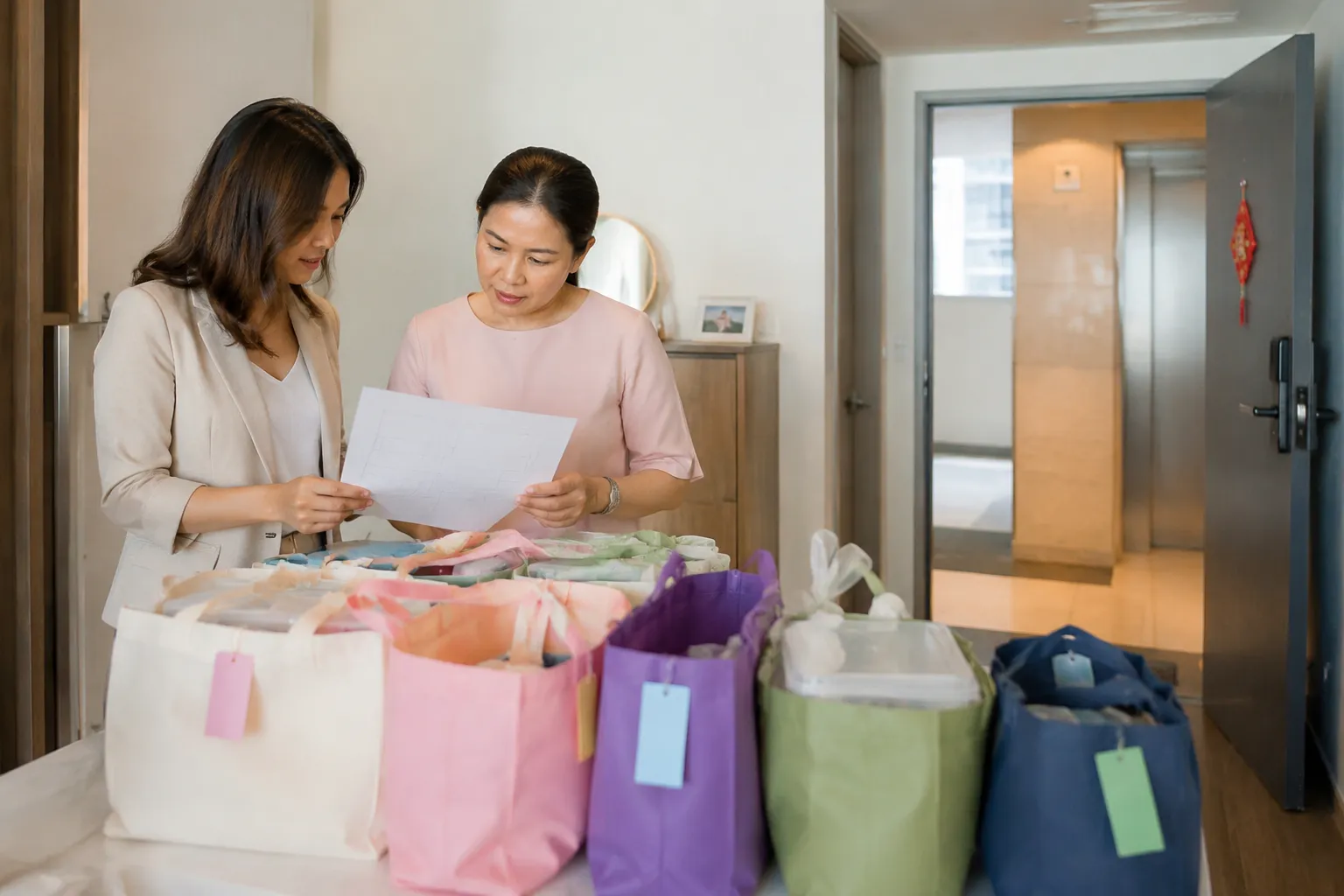
Separate departure belongings from game supplies. Assign every essential bag to a named person and vehicle, including attire, accessories, documents, tea ceremony items, and anything required at the next location.
The cleanup lead should check the activity rooms, entrance, and movement route before the last responsible household member leaves. The household host retains control over furniture, pets, valuables, private rooms, and any resident who needs quiet or uninterrupted access.
Final Confirmation Points
- Household: available rooms, private areas, participant count, bag storage, rubbish, pets, furniture, and cleanup owner.
- Families: chosen customs, representatives, excluded activities, photography boundaries, tea ceremony position, and any time-sensitive milestone.
- Property contact: current conditions affecting shared spaces, access, lifts, visitors, equipment, photography, deliveries, or loading.
- Providers: arrival windows, meeting points, equipment, setup needs, late-start response, and departure handoff.
- Transport: passenger list, pickup position, essential bags, route allowance, and person responsible for reporting a delay.
- Next location: current arrival instructions and the contact who can answer case-specific questions.
The plan is ready when the families agree on the format, the household accepts the space and participant count, and each provider understands the handoff. Protect the departure milestone, give one person authority over the sequence, and leave cleanup with a named owner.