What to Bring to a Singapore Solemnisation
Start with the current civil-process instructions, then separate circumstance-dependent documents, solemniser requests, venue instructions, and optional backups. The exact list can vary with the couple, registration channel, identity documents, and ceremony arrangement.

The available public-service material does not support one universal list of document names for every couple. Use the current civil guidance for the civil process, and treat venue, solemniser, religious, family, and backup items as separate planning categories.
Start With the People Attending
Create a preparation list for each person involved:
- Partner 1
- Partner 2
- Witness 1
- Witness 2, where applicable to the arrangement
- Appointed solemniser
- Person carrying the document folder
- Person coordinating the venue or reception desk
Witnesses should receive their own instructions. The couple's documents do not automatically cover witness identification or arrival arrangements. Check the current Registry of Marriages guidance for witness questions, then confirm any additional access instructions with the solemniser or venue.
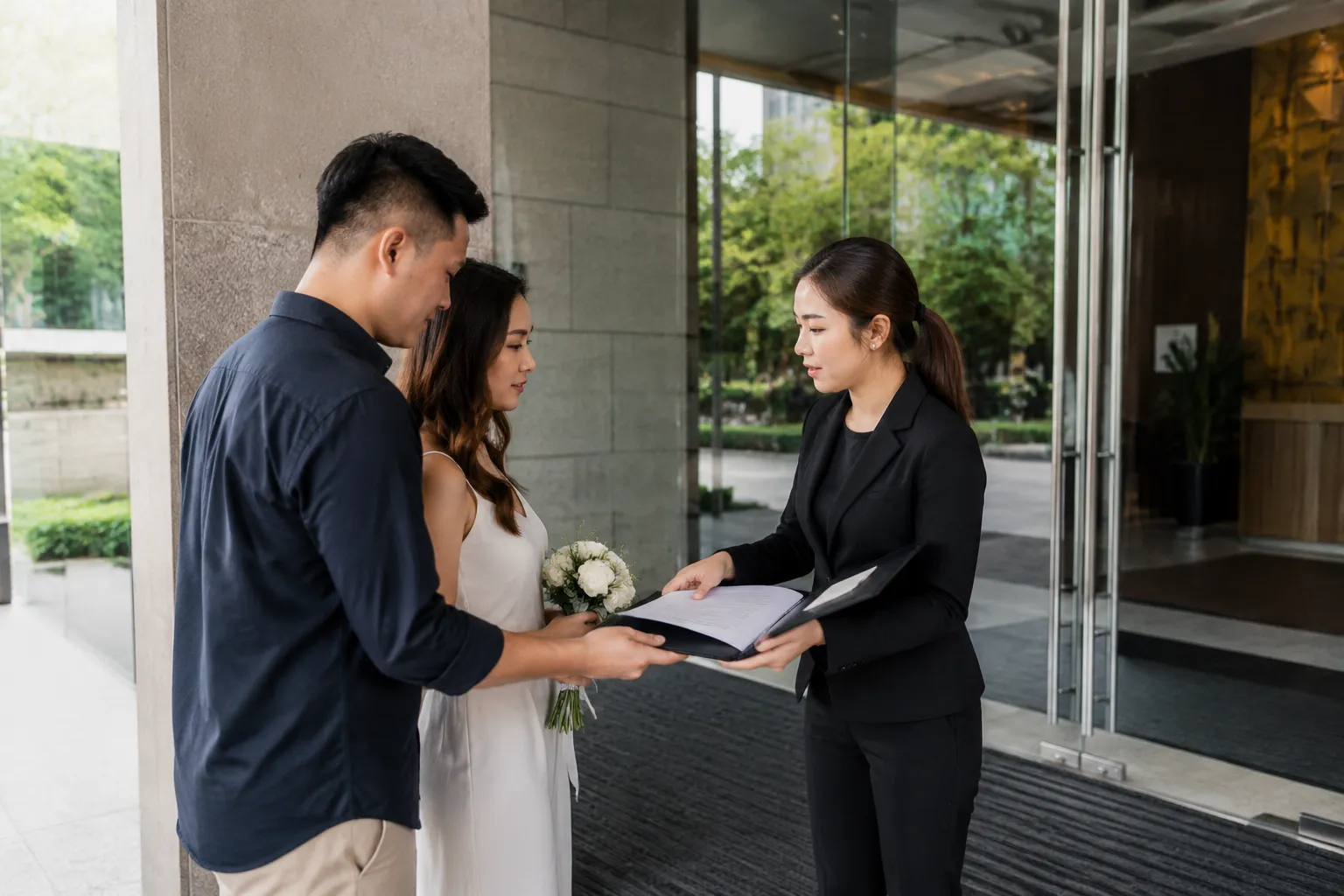
Assign one person to carry the folder through each handoff. Do not leave responsibility unclear between the couple, a parent, the photographer, or another guest.
Separate Civil Documents From Other Items
Use four clearly labelled sections in the folder.
1. Current Civil-Process Items
Place only items directly supported by the current Singapore public-service instructions in this section. Keep any conditions attached to the guidance. A document may apply to a particular identity, nationality, previous-marriage history, or ceremony circumstance, so do not turn a conditional instruction into a general rule.
Review Our Marriage Journey for the current civil-process instructions, then use the Registry of Marriages FAQs for narrower questions about identification, witnesses, foreign documents, and solemnisation arrangements. Note the date on which you checked both sources.
2. Circumstance-Dependent Documents
Keep a separate list for questions involving:
- Foreign-issued documents
- Unusual identification circumstances
- Witness arrangements
- Previous marriage or name-history questions
- A different registration channel
- A nonstandard ceremony format
- Documents requiring confirmation from an overseas authority
Check foreign-document questions early. Do not assume that a document issued outside Singapore follows the same process as a Singapore-issued document, or that translation, certification, or another step applies in every case. A photocopy cannot resolve an unresolved acceptance question.
If either partner or a witness has an identification situation outside the ordinary instructions, seek case-specific guidance from the relevant Registry of Marriages channel before the ceremony.
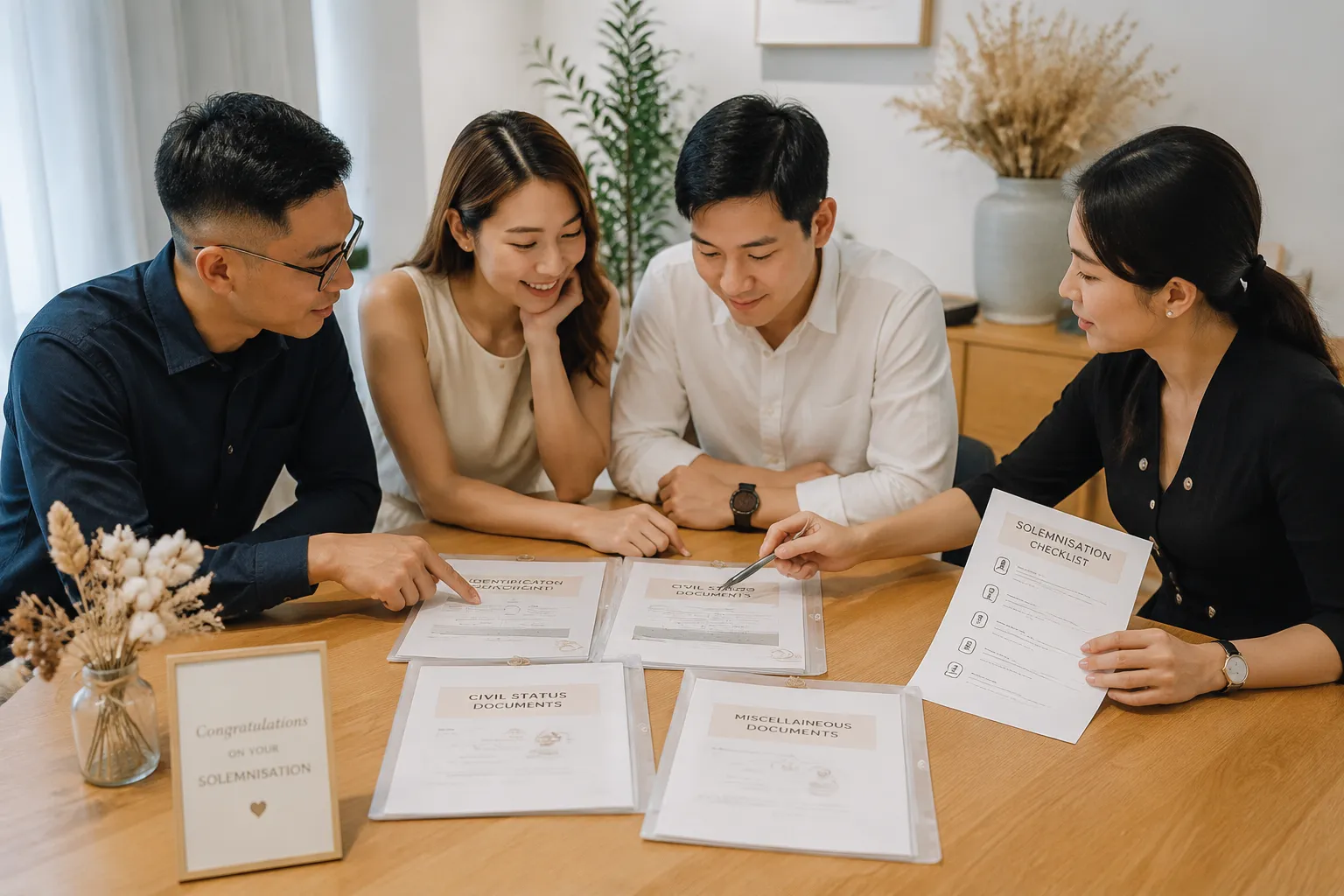
3. Solemniser Requests
Keep the solemniser's instructions separate from the civil-process checklist. Ask:
- Which documents the solemniser wants to see
- Whether information is needed before the ceremony
- Where the solemniser should report on arrival
- Who will meet the solemniser
- How much time is needed for pre-ceremony checks
- Whether the solemniser has a preferred ceremony order
- Who will hold the rings or other planned ceremony items
These requests relate to that solemniser and that ceremony. They do not automatically become Singapore solemnisation requirements for every couple.
Send the solemniser one concise information set containing the venue name, arrival window, contact person, and any venue-supplied parking, lift, or access details. Flag timing issues that could affect the ceremony.
4. Venue Instructions
Venue requirements concern access, security, timing, or room use rather than the civil process. A hotel ballroom, HDB home, temple, or rented hall may have different arrangements.
Ask the venue:
- Where the couple and witnesses should enter
- Where witnesses should wait
- Whether the document holder can enter before the ceremony
- Whether identification is needed at reception or security
- Where the solemniser can park or unload
- Whether lifts or sheltered access affect arrival
- Who may enter the ceremony area before the appointed time
- Where the document folder can be kept securely
For a home solemnisation, confirm building access and the lift plan with the household or person managing the arrival. For a hotel or hall, ask the venue coordinator to state the meeting point in writing. Tropical weather and separate arrivals can make a short travel buffer useful.
Keep Religious and Family Items Separate
A civil solemnisation may take place alongside a tea ceremony, gatecrash, nikah, bersanding, an Indian ceremony, or another family or religious event. These layers can share a date without sharing the same document process.
Family or religious organisers may ask someone to bring:
- Tea ceremony items
- Religious texts or ritual materials
- Family gifts
- Attire accessories
- Ceremony trays
- Food or serving items
- Items for a later celebration
These may matter to the wider ceremony plan, but they are not automatically documents for civil solemnisation. Confirm religious items with the relevant religious contact and family items with the person coordinating that custom.
Muslim couples should check whether their arrangements fall under the Registry of Muslim Marriages rather than assuming that a Registry of Marriages checklist applies. ROM and ROMM are separate administrative channels, so channel-specific questions should go to the relevant current authority.
Optional Backups
Optional backups can make the handoff easier, but label them as planning suggestions:
- Printed appointment or arrangement details
- A protected digital copy on a phone
- Contact details for the couple, witnesses, solemniser, and venue
- A simple document index
- A pen
- A protective folder
- A small waterproof sleeve
- A second person who knows where the folder is kept
These items do not show that a document will be accepted, replace an original where one is requested, or resolve a missing requirement. Keep sensitive digital copies protected, and avoid sending them through a large family group chat unless everyone understands how they will be stored and used.
Use This Confirmation Sequence
Several Weeks Before
- Review the current civil-process instructions.
- Check the Registry of Marriages FAQs for identification, witness, foreign-document, and arrangement questions.
- Label each item as civil-process, circumstance-dependent, solemniser-specific, venue-specific, religious or family-specific, or optional.
After the Venue and Solemniser Are Confirmed
Ask the solemniser and venue for their separate instructions. Assign one person to manage the folder and another to coordinate arrivals.
Foreign documents, unusual identification, a different registration channel, and nonstandard ceremony formats deserve early case-specific confirmation. Do not leave those questions until the ceremony morning.
Shortly Before the Ceremony
Recheck the current public-service pages and note the access date. Confirm that the couple and witnesses know what they personally need to bring, where they should arrive, and whom they should contact.
Compare the final list with the actual ceremony plan. Remove assumptions copied from another couple, another venue, a religious event, or an old article.
On the Day
- Leave home or the preparation venue with the folder.
- Confirm arrival with the venue or solemniser.
- Keep the folder accessible during the civil process.
- Return documents to the assigned holder after the ceremony.
- Move religious, family, photography, and banquet items according to their separate schedules.
The couple should not rely on a photographer, parent, makeup artist, or guest to carry civil documents unless that person has explicitly accepted the responsibility.
Common Misunderstandings
A Useful Item Is Automatically Required
No. A copy, folder, pen, or contact sheet may be useful without forming part of the civil process.
Every Witness Follows the Same Document List
Not necessarily. Witness instructions should be checked against current guidance and the specific ceremony arrangement.
A Foreign Document Follows the Same Process as a Singapore-Issued Document
Do not assume this. Foreign-document questions need current, circumstance-specific confirmation.
A Venue Rule Is a Registry of Marriages Rule
No. Venue access, parking, security, and room instructions belong to the venue.
A Religious or Family Ceremony Uses the Same Checklist
Not automatically. Civil, religious, and family arrangements can involve different people, items, and confirmation channels.
Final Check
Before leaving, the assigned document holder should be able to answer five questions:
- Which items are supported by current civil guidance?
- Which items apply only because of a specific circumstance?
- Which requests came from the solemniser?
- Which instructions came from the venue or religious contact?
- Who is responsible for each handoff?
That separation is the practical answer to what to bring to a Singapore solemnisation. It keeps civil documents identifiable, gives witnesses their own preparation route, and prevents optional or provider-specific items from being mistaken for universal requirements.