Family and Ceremony Role Coordination
Planning Indian wedding roles in Singapore is less about finding one fixed list and more about making responsibility visible. Several people may be involved in the same ceremony, but involvement is not the same as ownership. A parent may settle a family decision, a sibling may carry an item, a coordinator may track timing, and a priest or other ceremony lead may confirm what is needed for a particular religious practice.
The practical question is simple:
Who owns the task, what must move or happen, when is the cue, where does it happen, and who has confirmed the detail?
This approach can work across a temple ceremony, hotel event, hall reception, home gathering, or combination of locations. It also leaves room for regional, religious, family, and personal differences.
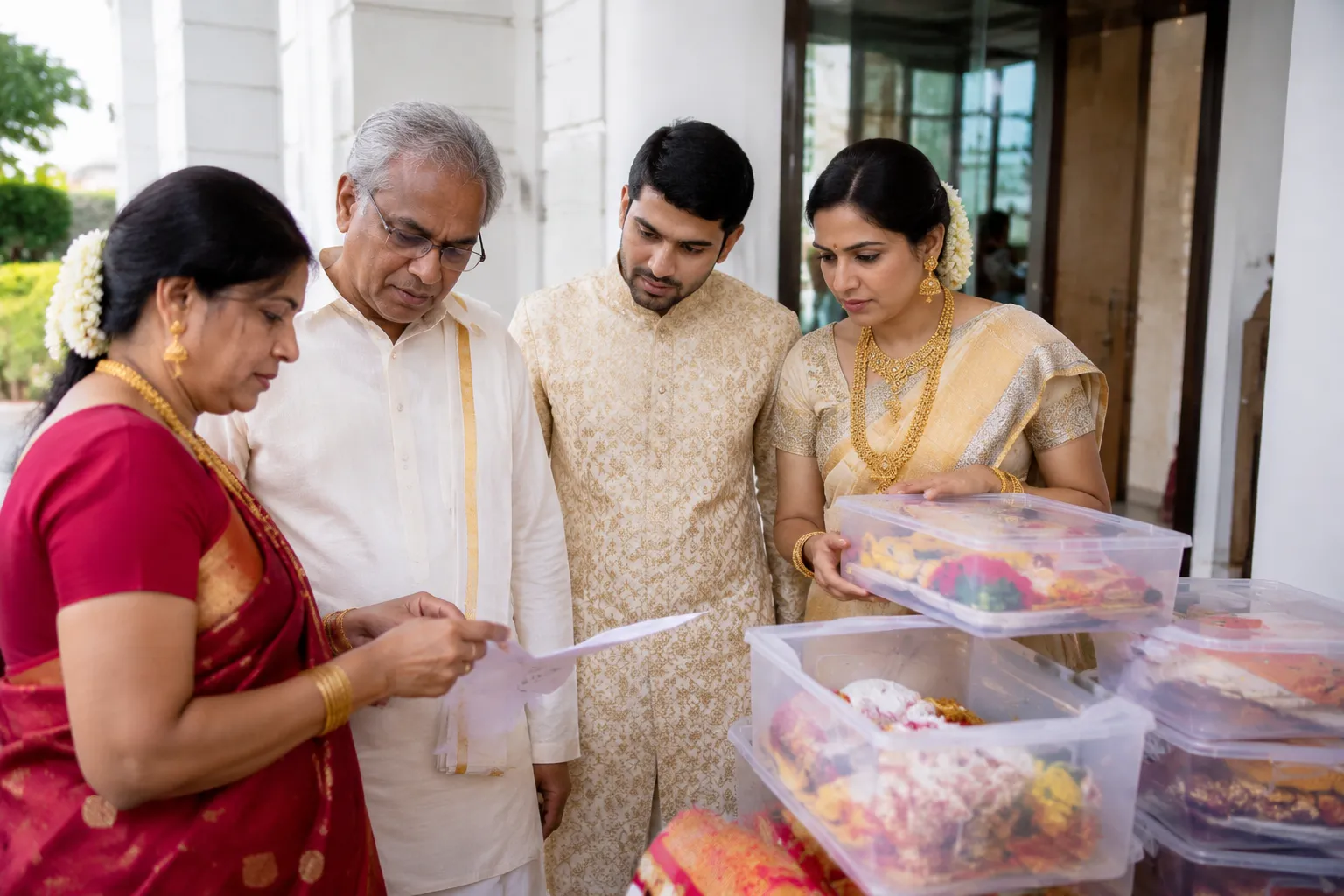
Why Indian Wedding Roles Need a Coordination Sheet
“Indian wedding” and “Hindu wedding” are not interchangeable descriptions. Indian families may follow Hindu, Sikh, Muslim, Christian, Jain, Buddhist, interfaith, secular, or blended practices. Within Hindu weddings, terminology, sequence, objects, and family participation may also vary by region, language, community, officiant, family, venue, and preference.
A programme may include terms such as Roka, Tilak, Haldi, Mehendi, Sangeet, Baraat, Ganesh Puja, Jaimala or Varmala, Kanyadaan, Saptapadi, Mangal Phera, Sindoor, Thali, Vidaai, Mandap, Panigrahana, Vivaha Homa, granthibandan, Kanya Aagman, Ashirwad, puja, or vratham. These names can identify what the family is discussing, but they do not by themselves establish who performs a task or which sequence applies.
A role sheet brings the unanswered parts into view:
- Is this a family preference, a religious instruction, a venue condition, or a civil-process question?
- Does it belong to the ceremony, reception, or a separate event?
- Does someone need to carry, prepare, approve, announce, witness, escort, or confirm it?
- What happens if the named person is delayed?
- Which provider, place of worship, ceremony lead, or public authority needs to confirm the detail?
Studies of Indian and diaspora weddings describe collective involvement from couples, parents, relatives, friends, community members, ritual participants, and service providers. Planning ownership can move between these groups. That supports a coordination method; it does not establish one universal family model.
Indian Wedding Ceremony Role and Item Handoff Sheet
Use one row for each meaningful task or handoff. A row may have several helpers, but it should have one named owner and a workable backup.
| Event or milestone | Task | Named owner | Backup | Item or information needed | Cue time | Location | Access restriction | Confirmation contact |
|---|---|---|---|---|---|---|---|---|
| Family planning | Coordinate family decisions | Agreed decisions and open questions | Family decision-maker | |||||
| Budget discussion | Record who pays for or supplies each item | Cost allocation and payment notes | Couple or family contact | |||||
| Pre-event ritual | Prepare agreed clothing, trays, lamps, garlands, or other items | Labelled item boxes | Family representative or ceremony lead | |||||
| Guest arrival | Receive close family and direct guests | Guest list and arrival notes | Venue or family liaison | |||||
| Supplier arrival | Direct suppliers to the correct entrance and setup point | Loading, parking, and contact details | Venue or supplier contact | |||||
| Procession | Coordinate escort, music, movement, and arrival cues where relevant | Route, timing, and agreed participants | Family coordinator and venue | |||||
| Ceremony | Move or present ritual items at the agreed cue | Item sequence confirmed with the ceremony lead | Priest or ceremony lead | |||||
| Family photographs | Gather elders and relatives in the planned order | Group list and meeting point | Photographer and family liaison | |||||
| Reception | Manage speeches, announcements, or programme changes | Running order and microphone information | MC or venue contact | |||||
| Departure | Coordinate elder transport and couple departure | Vehicle, driver, and departure contact | Transport contact | |||||
| Close-down | Collect personal items, payments, gifts, and hired materials | Collection checklist and labelled envelopes | Venue or coordinator |
This is a planning allocation. It is not evidence that a role is customary, religiously required, or legally necessary.
Start With Milestones, Not Titles
Labels such as “bride’s side,” “groom’s side,” “maternal uncle,” “brother,” “elder,” “friend,” or “coordinator” are useful shorthand, but they are too broad for a busy day. Start with the milestone, then assign the task.
- Family decisions and cost discussions
- Invitations and event-specific information
- Clothing, gifts, and ceremonial items
- Venue, temple, hall, or home preparation
- Guest and elder arrival
- Procession or escort movement
- Ceremony handoffs
- Family blessings and photographs
- Reception programme
- Departure, collection, and cleanup
Not every wedding includes all ten milestones. A multi-event celebration may need a separate sheet for each event because the people, clothing, items, locations, and timing can change. A Haldi or Mehendi gathering, Baraat arrival, main ceremony, or reception may each need its own owner and item list.
Separate Decision Owners From Day-of Owners
The person who makes a decision is not always the person who carries it out. A couple may decide that elders should sit near the ceremony area; a parent may coordinate transport; a sibling may meet the driver; and a family friend may escort relatives from the entrance. These should appear as separate rows.
- Decision owner: confirms a family preference or resolves disagreement.
- Ceremony contact: checks details with the priest, officiant, solemniser, or relevant religious contact.
- Venue contact: checks access, setup, timing, food, fire, photography, parking, or movement conditions with the actual provider.
- Day-of coordinator: keeps the schedule moving and directs questions to the right person.
- Item owner: holds and presents a specific object at the agreed point.
- Guest or elder liaison: handles arrival, seating, transport, and communication.
- Backup: takes over when the primary person is unavailable.
A coordinator can organise communication, but should not be treated as the deciding source for religious practice, civil procedure, or venue policy. Those details belong with the relevant ceremony contact, provider, or public authority.
Map the Handoffs Around the Ceremony
Before the ceremony
List the items that must be gathered, checked, labelled, transported, and placed. Depending on the chosen practice, these may include garments, trays, lamps, flowers, garlands, gifts, offerings, a Thali or other jewellery, printed schedules, seating notes, or family photographs.
Do not assume that a familiar ritual name or commercial checklist provides the complete item list. Confirm the arrangement with the family’s priest, officiant, religious contact, or ceremony lead. When a detail is personal or regional, record the family’s decision rather than presenting it as a general rule.
Assign one person to each physical stage:
- Collect the item.
- Check that it is present.
- Transport it.
- Place it at the agreed location.
- Present or pass it when cued.
- Return or pack it after use.
During a procession or arrival
If a Baraat, Kanya Aagman, escort, or another procession is planned, treat it as a movement plan. Record where the group assembles, who signals the start, who stays with the couple, who supports elders or children, who carries agreed items, who meets the venue contact, where the group waits if the ceremony area is not ready, and who communicates a delay.
These are logistics assignments. The presence, name, and order of a procession vary by family and community.
During the ceremony
Use the ceremony lead’s sequence as the working reference for religious actions. The family role sheet should show the support tasks around that sequence.
A local National Library Board description of Singapore Hindu weddings mentions possible participation by priests, parents, relatives, siblings or maternal relatives, guests, and elders, alongside items and settings such as lamps, trays, garments, garlands, ceremonial fire, and blessings. It is a local descriptive example, but it is partial and Hindu-specific. It should not be treated as a complete model for every Indian wedding in Singapore.
Useful rows might say:
- Hold garlands until the ceremony lead signals.
- Bring the agreed tray to the designated person.
- Gather parents and elders for Ashirwad.
- Keep the next item with the ceremony-side assistant.
- Guide relatives to the correct seating area.
- Tell the photographer when a family grouping is ready.
- Return unused items to the labelled box.
When terms such as Kanyadaan, Saptapadi, Mangal Phera, Panigrahana, Mangalsutra, Sindoor, or Vivaha Homa appear, place the practical handoff beside the term. Do not assume that the meaning, sequence, or participant list is the same in every family.
After the ceremony
The close of the ceremony creates further handoffs. Assign owners for gifts and personal items, ceremonial objects, family photographs, elder transport, labelled payments, hired equipment, venue items, reception changes, and cleanup.
A departure ritual such as Vidaai may be included, adapted, or omitted. Its presence does not decide civil status, and its family roles should be confirmed with the couple and relevant ceremony lead.
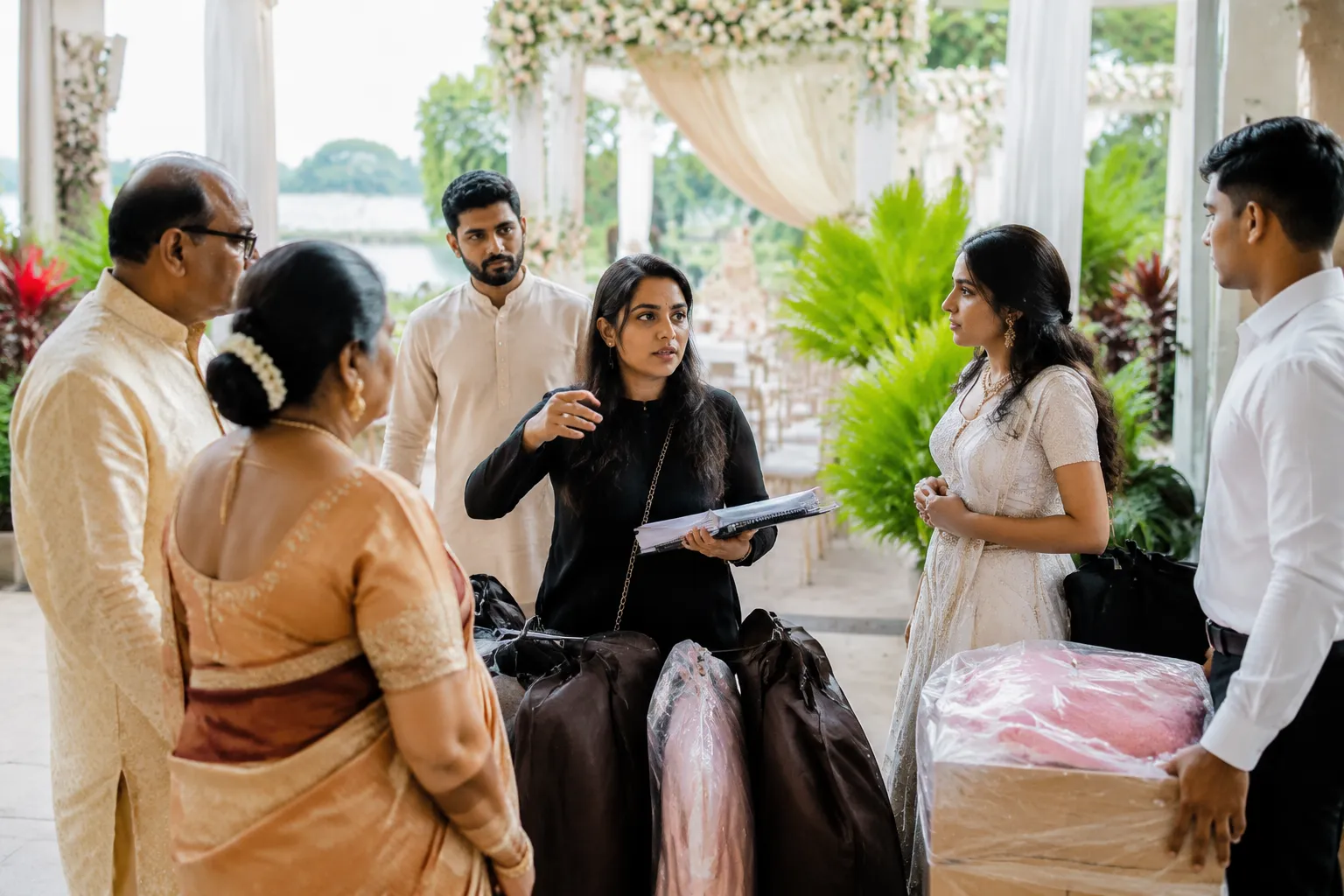
Build Backup Roles That Can Act
A backup needs the information and access required to take over. Someone who is also in the procession, giving a speech, or managing a distant location may not be a workable backup.
For each important row, ask whether the backup can reach the location, identify the item, contact the relevant person, speak to the venue or supplier, and understand whether they may make a decision or only report a problem. Label and store the item where the backup can find it.
Practical pairings might include a sibling backing up the family liaison, a cousin backing up an item carrier, a trusted friend backing up supplier direction, a relative backing up elder transport, the MC backing up the announcement contact, or a family coordinator backing up the photography liaison. These are planning suggestions, not evidence of a customary role structure.
Give Each Group the Information It Needs
Family participation may be extensive, but not everyone needs the full production schedule. Keep the complete sheet with the main coordinator and send each group the part relevant to its role.
- Elders: arrival time, meeting point, seating, walking distance, transport, and a family contact.
- Ceremony relatives: arrival time, clothing or item responsibility, waiting place, and cue.
- Procession participants: assembly point, route, movement instructions, and start signal.
- Photographer: ceremony boundaries, family-photo list, permitted positions, and the person to ask before moving closer.
- Suppliers: arrival entrance, loading instructions, setup area, meal arrangements where relevant, and contact person.
- Guests: event address, start time, arrival guidance, and whether separate events have separate invitations or schedules.
A printed copy can remain with the day-of coordinator even when the working version is electronic. The schedule is an operational document, not a substitute for venue instructions or religious guidance.
Confirm Access Before Assigning Setup or Photography
Photography, supplier setup, and guest movement depend on the particular temple, hall, hotel, home, priest, venue, or solemniser. The available material does not establish one Singapore-wide rule for camera positions, mandap access, ceremonial fire, food, permits, timing, or guest movement.
| Question | Confirm with | Record |
|---|---|---|
| Where may photographers stand or move? | Place of worship, venue, priest, or ceremony lead | Permitted positions and restrictions |
| May suppliers unload at a particular entrance? | Venue or building contact | Entrance, timing, and parking instructions |
| Can family members enter the ceremony area before the event? | Relevant venue or religious contact | Access window and named liaison |
| Are there restrictions affecting lamps, fire, food, decorations, or movement? | Actual venue or relevant authority | Current instructions and review date |
| Who may change the running order? | Couple and ceremony or event lead | Decision contact |
| Who confirms civil-process details? | Relevant public service | Current information and review date |
A photographer’s concern about avoiding obstruction near a mandap can be used as a prompt to ask about access. It is not a general photography rule. Record the answer for the specific place, ceremony, and provider.
Keep Civil Procedure Outside the Ritual Role Map
A family ceremony and a civil solemnisation may happen on the same day or on different days. They should still have separate planning rows and separate confirmation sources.
The material available for this page does not include a current Singapore primary public-service source for eligibility, document acceptance, appointment requirements, or changing civil procedure. A religious description, family custom, or commercial wedding guide should not be used to answer those questions.
For civil-process planning, record the public-service page or authority to check, the date the information was reviewed, the person responsible for checking updates, the documents or appointments to verify, and any timing dependency affecting the event schedule. A role such as witness, parent, elder, priest, or item carrier should not be described as a civil requirement without confirmation from the relevant public authority. Likewise, Saptapadi, Mangal Phera, Thali, Kanyadaan, and Vivaha Homa should not be presented as automatically determining legal marital status.
A Confirmation Workflow
When the ceremony plan is chosen
Record which events are included, which are optional, and who can confirm religious or family details. Note unfamiliar terminology and check its intended meaning with the relevant family member or ceremony lead.
When locations are booked
Create a location sheet for every home, temple, hall, hotel, or reception site. Record access points, setup windows, movement limits, photography questions, parking information, and the provider contact. One venue’s instruction should not be treated as a general Singapore rule.
Shortly before the event
Reconfirm supplier arrival, assembly cues, item boxes, elder vehicles, photographer access, venue setup and collection, speech order, payment envelopes, and weather or travel contingencies for outdoor movement. Record the reconfirmation date, contact person, arrival details, and changes.
Reconfirmation exposes changes while there is still time to reassign an owner or backup. It cannot ensure that every timing or service condition will remain unchanged.
On the day
When a problem occurs, first identify whether it is a family decision, ceremony question, venue or access question, supplier question, civil-process question, or transport and guest-flow problem. Routing the question correctly is usually more useful than asking one person to resolve everything.
Common Role-Mapping Errors
Treating one regional practice as the Indian wedding model
A Baraat-led example, a Thali-centred ceremony, a temple wedding, and a hotel ceremony may use different terms and handoffs. Use the family’s selected format as the source for the working plan.
Giving a ritual name without an owner
“Jaimala at 7:30” does not say who has the garlands, where they wait, who signals the handoff, or who gathers the relevant family group.
Making the couple responsible for every decision
Some couples lead every area; some parents or relatives coordinate particular tasks; many arrangements are shared. Record the actual decision owner beside each task.
Using a coordinator as a substitute for the relevant source
A coordinator can manage people and information. They cannot independently determine religious practice, civil eligibility, document acceptance, or venue permission.
Listing a backup who has no access
A backup without the item, contact details, route, or decision authority is not operationally useful. Give that person the relevant row and storage information.
Copying a commercial sequence
Commercial wedding pages can reveal search terms and planning questions. They are not enough to establish a universal sequence, symbolic interpretation, civil conclusion, or venue requirement.
How to Judge a Complete Role Sheet
Before circulating the sheet, check whether every important row answers these questions:
- Is there one named owner?
- Is the backup available at the right time and place?
- Is the item or information clearly identified?
- Is the cue connected to a person or event?
- Is the location specific?
- Are access restrictions recorded rather than assumed?
- Is the confirmation contact named?
- Is the practical task separated from the ritual’s meaning?
- Is the source of the instruction clear?
- Does the row distinguish family preference, ceremony guidance, venue policy, civil procedure, and planning advice?
The sheet is ready when someone outside the planning conversation can read one row and understand what to do, where to go, and whom to contact.
Frequently Asked Questions
Who should coordinate Indian wedding roles?
A named family coordinator or day-of contact can support separate owners for ceremony items, guests, elders, suppliers, photography, transport, and reception announcements. The workable arrangement depends on the family structure and event format.
Are Indian wedding roles fixed by tradition?
No single role map applies to every Indian family. Roles and sequence may vary by region, language, religion, community, generation, family practice, ceremony lead, venue, and preference.
Should parents or the couple make the decisions?
That is a family decision. Put the actual decision owner beside each task so that planning responsibility is clear.
What belongs on an Indian wedding role matrix?
Include the milestone, task, named owner, backup, item or information needed, cue time, location, access restriction, and confirmation contact. A notes field can identify whether the instruction came from the couple, family, ceremony lead, venue, provider, or public authority.
Who handles ritual items?
Assign an item owner and backup for each item. Confirm the list and sequence with the relevant family and ceremony lead. A garland, Thali, tray, lamp, offering, or ceremonial fire may be handled differently across ceremonies.
How should a Baraat or procession be coordinated?
Record the assembly point, start cue, route, escorts, elder support, item carriers, venue contact, waiting point, and delay communication. Include a Baraat only when it forms part of the couple’s chosen programme.
Can the photographer enter the Mandap area?
Do not assume permission. Ask the relevant place of worship, venue, priest, ceremony lead, or solemniser about camera positions, movement, and obstruction concerns. Record the answer before the event.
Does Saptapadi or another ritual establish civil marriage status?
Cultural or religious descriptions should not be used to decide civil status. Keep civil-process questions with the relevant current public authority and religious-practice questions with the appropriate ceremony lead.
When should suppliers be reconfirmed?
Reconfirm suppliers as the event approaches and give each one the schedule details relevant to their role. The exact timing depends on the provider and event, so record the date, contact person, arrival details, and changes.
What if the family cannot agree on a role?
Separate the decision from the execution. Name the person who can resolve the family question, record the outcome, and then assign the day-of owner and backup. A coordinator can organise the conversation without presenting a personal preference as a religious or civil requirement.
Final Working Principle
Indian wedding task ownership becomes manageable when the plan follows the movement of people, items, information, and decisions. Use cultural terms to identify what the family is discussing, then translate each chosen element into an owner, backup, cue, location, access note, and confirmation contact.
The ceremony remains specific to the couple and their family. The coordination sheet makes that chosen arrangement visible, checkable, and easier to hand over.
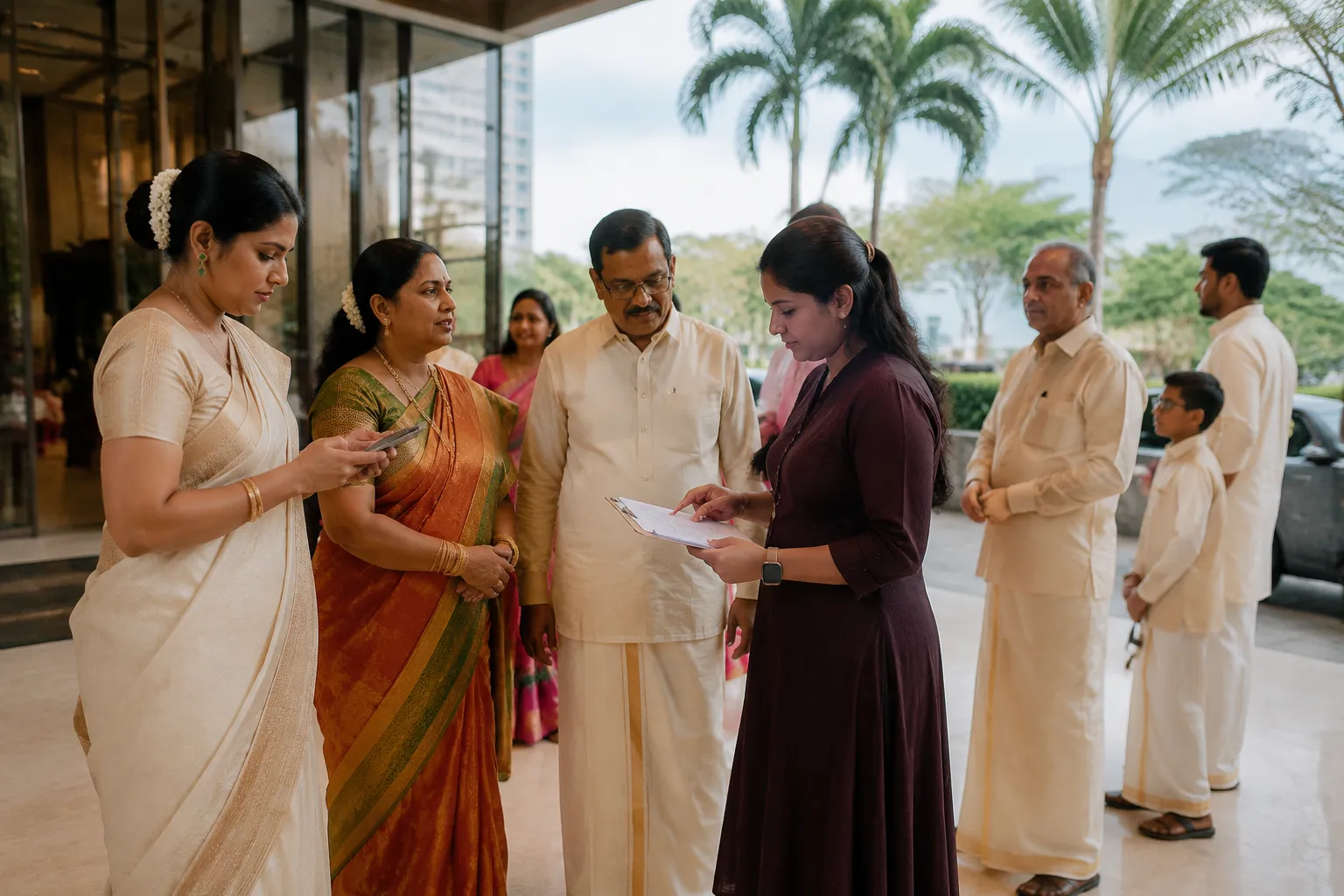
Sources
- Singapore Hindu weddings. National Library Board descriptive cultural reference; used for a bounded local example of participants, settings, and ceremonial items.
- Project Management is a tool of functional areas and a systematic procedure to implement a weeding event: A case study. Used for planning concepts such as task ownership, schedules, contact points, and event coordination.
- Event Plan: Finnish-Singaporean Cross-cultural Wedding. Used as a bounded planning example for cross-cultural event coordination, not as a model for Indian wedding customs.
- A Cross-Cultural Study of Weddings through Media and Ritual: Analyzing Indian and North American Weddings. Used for comparative context and variation in wedding presentation and ritual framing.
These sources support descriptive context and planning boundaries. They do not establish a universal Indian wedding role map, religious ruling, civil-process outcome, venue policy, or provider requirement. Current civil, venue, place-of-worship, ceremony, photography, and supplier details should be confirmed with the relevant source.