Solemniser and Witness Coordination
Planning a solemniser and witnesses for a Singapore wedding is less about collecting names than keeping several moving parts connected. The couple, solemniser, witnesses, venue, family members, photographer, and ceremony participants may each hold a different part of the schedule.
A workable plan makes five points visible: who sends the first enquiry, what information the solemniser needs, who confirms and briefs the witnesses, which details belong to the civil process or another setting, and who owns the final handoffs.
Use this as a coordination framework rather than an eligibility decision. Civil solemnisation details can change, and the answer may depend on the pathway, current public-service information, solemniser instructions, venue policy, religious arrangements, and the couple’s circumstances. Confirm case-specific matters with the relevant public service, solemniser, religious contact, or venue.

More specific pages
These pages continue the topic in smaller, more specific directions.
Keep the Roles Separate
A solemniser is connected to the ceremony. Witnesses are connected to the participation required or expected under the pathway being followed. The venue controls practical matters such as access, room use, timing, layout, sound, and photography. These roles may appear in the same conversation, but they do not carry the same responsibility.
- The solemniser may need the proposed date, time, location, couple details, and ceremony context.
- Witnesses need practical information about where to go, when to arrive, whom to contact, and which items the relevant authority or institution has asked them to bring.
- The venue may need the ceremony window, room layout, equipment requests, access list, and movement plan.
- Family members may need to understand how the solemnisation fits around a tea ceremony, gatecrash, nikah, temple ceremony, banquet, or other event.
- The photographer needs to know which moments must not be interrupted or treated as repeatable photo opportunities.
The couple’s job is to connect these conversations while keeping civil process, religious practice, venue rules, family custom, and personal preference visibly distinct.
Before You Invite a Solemniser
Prepare a short information sheet before sending the first enquiry. It need not contain the entire wedding plan. It should give the solemniser enough context to respond and show which details are still open.
- The couple’s names as they should appear in the relevant records or ceremony materials
- Proposed date and ceremony time
- Full venue name and exact ceremony location
- A backup location or timing option, if one exists
- Expected number of people in the solemnisation area
- Whether the ceremony sits within a wider Chinese, Malay, Indian, civil, blended, or interfaith wedding schedule
- Preferred language or languages for coordination
- Main contact person on the wedding day
- Expected arrival and departure window
- Known venue access restrictions
- Intended witness arrangement, marked as pending if it has not been checked
Label unsettled information clearly. “Proposed”, “awaiting venue confirmation”, and “to be checked with the relevant authority” are more useful than allowing an early message to sound like a final commitment.
Choose One Primary Contact
One partner or designated coordinator should normally send the main enquiry so that the solemniser does not receive duplicate instructions. The other partner can review the information and keep the wider planning record.
- One person sends the initial enquiry.
- Both partners review the date, venue, ceremony pathway, and open questions.
- One coordinator handles routine follow-ups.
- Both partners approve changes that affect the ceremony or wider family schedule.
This is a planning choice, not a universal family or cultural rule. Some couples involve parents, an elder, a wedding planner, or a religious contact early. The useful principle is simple: every open item should have one person responsible for the next action.
How to Invite and Confirm a Solemniser in Singapore
An enquiry should be specific enough to support a useful response. Asking whether someone is “free sometime in June” leaves the date, timing, location, and next steps unclear.
A practical message can cover:
- The proposed wedding date
- The proposed solemnisation time
- The venue and exact room or area
- Whether the date or time can move
- The ceremony pathway the couple expects to follow
- The contact details of the person coordinating the event
- The date by which the couple hopes to receive a response
- Known timing conflicts, such as a tea ceremony, gatecrash, banquet opening, temple schedule, or nikah and bersanding sequence
Keep “accepted by the solemniser” separate from “fully confirmed” in the planning record. A response may settle availability while leaving venue arrangements, follow-up information, payment arrangements, documents, or public-service steps to be checked. The available research material does not establish one current operational workflow for every couple, so do not treat a verbal acceptance as proof that every part of the process is complete.
| Record separately | Why it matters |
|---|---|
| Date and time accepted by the solemniser | Shows what has been discussed, without implying that other parties have agreed. |
| Location accepted by the solemniser | Keeps the ceremony location distinct from venue access approval. |
| Information still required | Prevents an unanswered request from disappearing in an email thread. |
| Instructions received | Separates provider guidance from family preference or editorial planning. |
| Follow-up date and owner | Makes the next handoff visible. |
| Items for the venue or public service | Routes each question to the person who controls that information. |

Solemniser Follow-up Questions
- Is the proposed date, time, and location workable from your side?
- What information should the couple provide now?
- Are there instructions for the ceremony location or room setup?
- How much arrival time should be allowed?
- Should the solemniser receive the venue contact or day-of coordinator’s details?
- What is the preferred method for handling changes?
- When should the couple send a final coordination message?
- Are there language, programme, or access matters to discuss?
- Which questions should be checked directly with the relevant public service or religious institution?
Invitation and Confirmation Timing
There is no single useful countdown for every Singapore wedding. Timing changes when the date is tied to a venue, family custom, religious calendar, temple or hall availability, travel plans, or a tightly packed wedding-day programme.
Use milestones instead of relying on one number of weeks.
Early Planning
Identify the intended ceremony pathway, preferred date and time, likely venue, same-day religious or family events, and the person responsible for solemniser and witness coordination. Keep uncertainties visible. A preferred ballroom without confirmed room access, or a preferred ceremony time that conflicts with a temple schedule, is a planning issue still in progress.
When the Date and Venue Take Shape
Send the solemniser enquiry with the most complete information available. Ask the venue separately about:
- Access and setup time
- Clearing or room turnover time
- Chairs, tables, microphones, and other equipment
- Guest movement between the ceremony and banquet spaces
- Photography and filming arrangements
- Lift, parking, loading, and security instructions
- Availability of a separate ceremony room
- The venue contact on the day
A venue response describes that venue’s operating conditions. It does not establish a civil or religious requirement.
After the Solemniser Responds
Update the record promptly. Confirm the ceremony location with the venue, check the witness plan, share the relevant schedule with the solemniser, and note the next follow-up date. Review current public-service information through the relevant channel, and tell family members which details remain proposed rather than final.
Final Coordination
Near the wedding date, prepare one concise handoff for the people who need it. Include the arrival time, meeting point, ceremony start time, location, main contact, witness names and contact details, venue contact, transport notes, the sequence immediately before and after the ceremony, and any item still awaiting confirmation.
A final schedule is a coordination tool. It should record checked information without inventing or restating requirements that have not been confirmed.
Confirming and Briefing the Witnesses
Witnesses are sometimes invited socially but briefed too late to participate smoothly. Assign one person to confirm them and send the same core information to each witness.
Ask each witness to confirm:
- Availability for the full relevant time window
- Ceremony location and expected arrival time
- Preferred contact method
- Any identity or documentation items the relevant pathway has asked them to bring
- Whether they can remain reachable during the ceremony period
- Who to contact if they are delayed
Do not present a particular document, relationship, or status as universally required unless the relevant authority or institution has confirmed it for that pathway.
What the Witness Brief Should Contain
- Wedding date and arrival time
- Exact meeting point
- Ceremony start time
- Seating or standing arrangement, if already decided
- Main coordinator’s name and contact number
- Venue access instructions
- Expected end time
- Instructions for delays
- Items specifically confirmed with the relevant authority or institution
Distinguish confirmed instructions from suggestions. “The venue has asked guests to enter through the side lobby” is different from “The family prefers witnesses to use the side lobby.” Both may matter, but they do not carry the same weight.
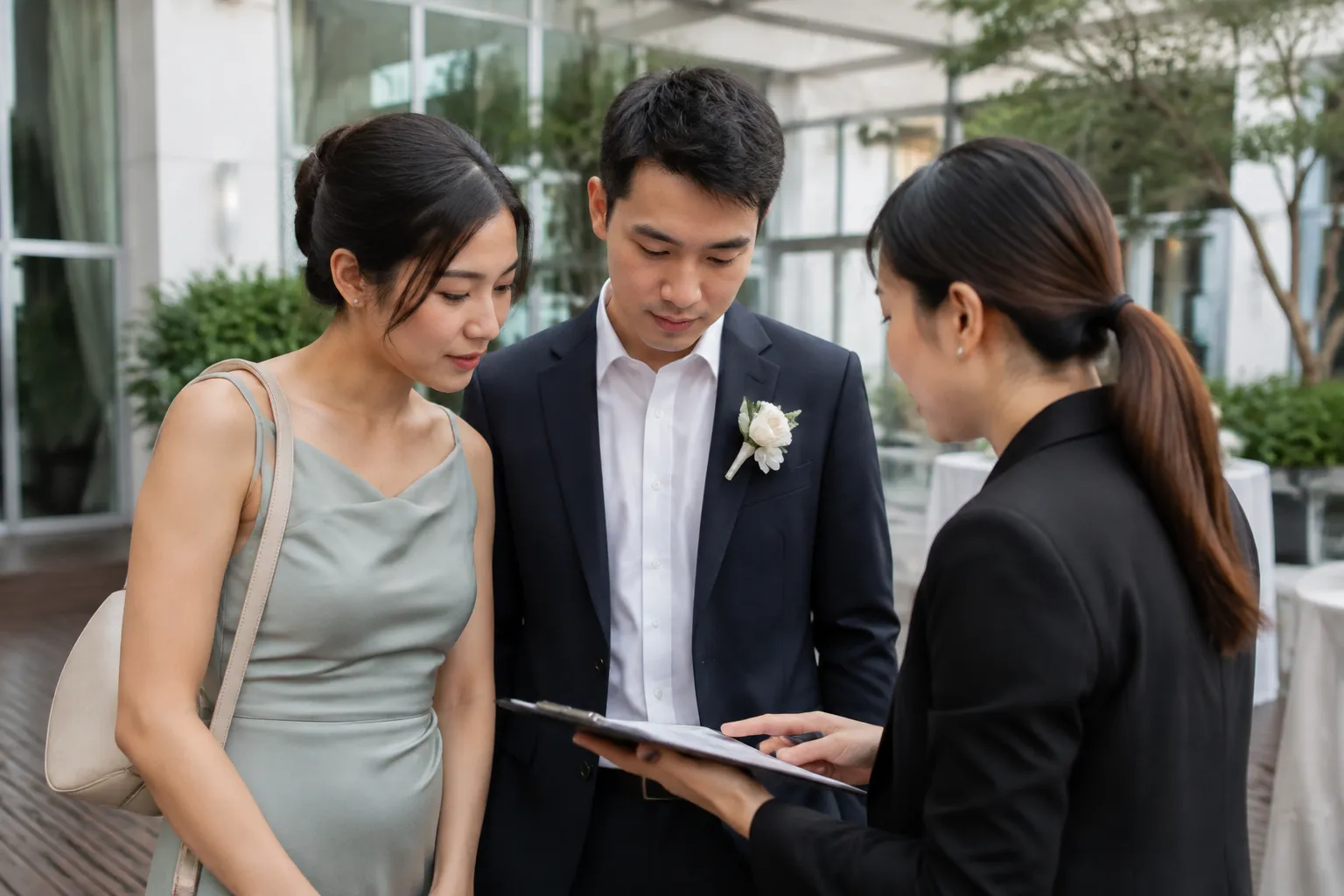
Separate the Four Planning Systems
The same wedding can contain several systems of meaning and responsibility. Placing each item in the right category prevents avoidable confusion.
Civil Process
This covers the current public process and information relevant to the civil solemnisation or registration pathway. Requirements may change, and individual circumstances may affect what needs to be checked. Use current public-service information for these questions.
Religious Practice
A nikah, temple ceremony, blessing, or other religious observance may have its own participants, sequence, language, preparation, and institutional contact. A civil solemniser may not be the right person to answer those questions.
For Muslim weddings, terms such as nikah, akad nikah, witnesses, guardian, and religious official may arise in family discussions. Their practical meaning and institutional handling should be checked with the relevant religious contact or place of worship. An older academic description or a family explanation should not be treated as a current instruction for every couple.
Venue Rules
A hotel ballroom, HDB home, temple, community space, or other venue may set practical conditions concerning access, room use, sound, parking, guest movement, photography, and timing. These conditions belong to the specific venue and date.
Family Custom and Personal Preference
Tea ceremonies, gatecrashes, gift exchanges, elder introductions, attire changes, and family photographs may shape the day without forming part of the civil process. The couple may also choose a private ceremony, bilingual coordination, a particular seating arrangement, or a short interval between events. Record these as family customs or personal choices rather than obligations.
This classification is a useful test for common misunderstandings: a family preference is not automatically a civil rule, a venue restriction is not automatically a religious requirement, and an academic account does not replace current instructions from the relevant institution.
Build the Solemniser and Witness Handoff
The handoff before the ceremony is where separate conversations become one working plan. Give everyone who needs to act the same core facts, while sending only the relevant portion to people who do not need the full wedding file.
Ceremony Information
- Date, start time, location, and expected end window
- Ceremony pathway
- Language or programme notes
- What is confirmed and what remains pending
People and Responsibilities
- Couple’s primary coordinator
- Solemniser contact
- Witnesses and witness coordinator
- Venue contact
- Religious or place-of-worship contact, where applicable
- Photographer or content team
- Person responsible for family announcements
Movement and Contingencies
- Arrival and meeting point
- Access, parking, and transport instructions
- What happens if the solemniser or a witness is delayed
- Who communicates a venue change
- Where guests wait before entering
- Who holds the latest schedule and contact list
A contingency plan should assign communication ownership. It cannot ensure that every timing handoff will proceed exactly as planned, but it can make the next call clear.
Fitting the Solemnisation Around Other Ceremonies
A Singapore wedding may combine a civil solemnisation with a Chinese tea ceremony, gatecrash, Malay nikah and bersanding events, an Indian temple or hall ceremony, a banquet, or a blended family programme.
Start with the solemnisation window, then map the surrounding activities around it. Account for guest movement, attire changes, family photographs, religious or cultural preparation, travel between locations, venue access, room turnover, meals, and communication with elders and key participants.
Two ceremonies may each look short on paper but still need space between them. Guests may need to move, chairs may need to be rearranged, attire may change, documents may need to be prepared, or family members may need to gather. For intercultural or interfaith weddings, write the sequence in plain language and assign an owner to every transition so that one family is not relying on another to explain the plan.
Common Coordination Mix-ups
Treating a Date Hold as Final
A tentative response, calendar note, or family announcement may be mistaken for completed confirmation. Mark the status until the solemniser, venue, and relevant authority or institution have each confirmed the part that belongs to them.
Asking One Person to Answer Everything
A solemniser may answer ceremony-related questions but not venue access or religious-institution procedures. A venue may answer room access but not civil eligibility or witness questions. Send each question to the person who controls that information.
Confirming Witnesses Too Late
Witnesses may need time to arrange work, transport, family, or travel. Check availability early, then resend the practical brief closer to the ceremony.
Sending Different Schedules
Small differences in start time or location can create confusion. Keep one master schedule, add a version date or time, and distribute only the necessary section to each person.
Using Family Language as Process Language
“The elders said this must happen first” may describe an important family expectation without identifying whether it is a civil step, religious practice, venue condition, or personal preference. Place it in the right category before adding it to the schedule.
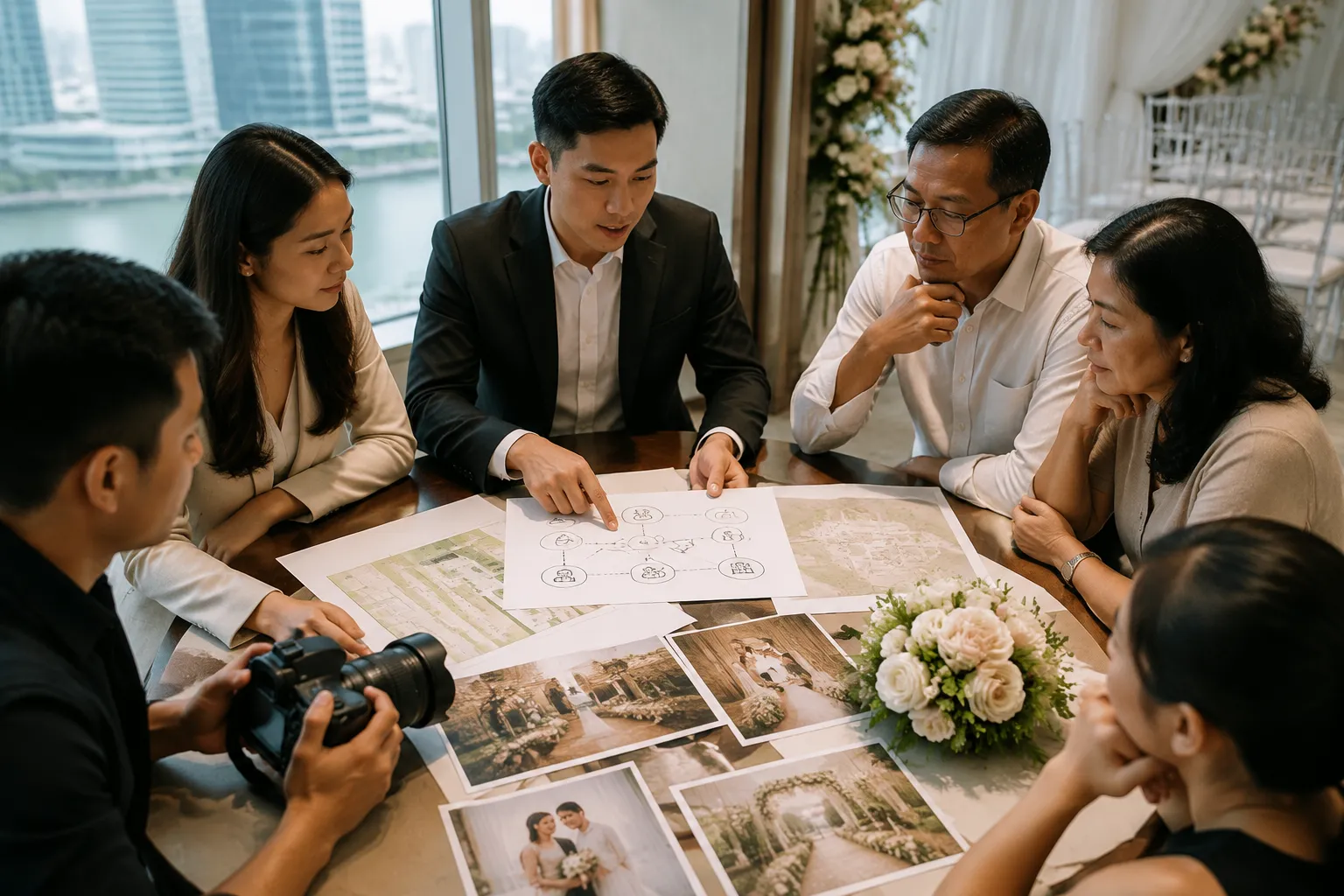
A Practical Coordination Record
| Item | Owner | Status | Next action | Confirm with |
|---|---|---|---|---|
| Solemniser date and time | Couple contact | Proposed or accepted | Send or request follow-up | Solemniser |
| Ceremony location | Venue contact | Pending or confirmed | Check access and room details | Venue |
| Witness availability | Witness coordinator | Pending or confirmed | Send briefing note | Witnesses |
| Current civil process | Couple | To be checked | Review current public information | Relevant public service |
| Religious ceremony details | Family or religious contact | Pending or confirmed | Confirm pathway instructions | Relevant institution |
| Wedding-day handoff | Day-of coordinator | Draft or final | Circulate latest schedule | Key contacts |
The record does not need to be elaborate. Its value is that every unresolved item has an owner, a status, and a next action.
Final Checks Before the Ceremony
- Has the solemniser received the final date, time, and location?
- Has the venue confirmed access and the ceremony area?
- Have all witnesses confirmed their availability?
- Have witnesses received arrival and contact instructions?
- Has current public-service information been checked recently?
- Have religious or place-of-worship instructions been confirmed separately, where applicable?
- Does the schedule distinguish requirements from customs and preferences?
- Does one person hold the latest contact list?
- Does one person communicate delays or location changes?
- Do the couple and key family members know what happens immediately before and after the solemnisation?
The aim is not to make every wedding follow one sequence. It is to make the chosen sequence understandable to the people carrying it out. Clear ownership lets couples adapt a Singapore wedding while keeping solemniser instructions, witness participation, venue policy, religious practice, family custom, and current civil-process information in their proper places.
Sources
- Solemnization of Marriage: Conceptualization and Statutory Interpretation
- Muslim Personal Laws and the Accommodation of Minorities: The Need to Better Balance Individual Rights and Group Autonomy in Singapore
- Skills for “Marriage of a Lifetime”: An Examination of Muslim Marriage Preparation Handbooks in Singapore, 1974 to 2018
- Reshaping Marital Power: How Dual-Career Newlywed Couples Create Equality in Singapore